A Hot Water Bottle and A Ticket to Ride at Fifth and F

“Changed Hands” was the header on a short item in the San Diego Evening Tribune on Wednesday, November 6, 1901. It was about the change of ownership at what had been Chase’s Drug Store at Fifth and F in downtown San Diego.

Mr. Chase was retiring, the article explained, and selling his business to “Mr. Hazelrigg, an Indiana man, who has been clerking at one of the large stores in Los Angeles for the past four months.”

Dyar C. Hazelrigg was indeed a native Midwesterner, like a lot of others who flocked to California in the late 19th and early 20th centuries. Born in Greensburg, Indiana in 1866, he graduated from the Chicago College of Pharmacy in 1890. As late as June 1900, he was still in the Midwest, working as a druggist and living in the town of Rushville, Indiana with his wife Grace. Dyar was 33 and Grace was 28, as recorded in the 1900 U. S. Census.

Yet within a year the young couple had pulled up roots and headed to southern California, where Dyar soon took over a thriving business and set about making it his own. The ads he ran regularly in San Diego newspapers in his first few years, while having his name in large letters, also always reminded people that he was “Successor to Chas. A. Chase.”

An ad that regularly ran in the Evening Tribune in early 1902 began with a list of “Mid-Winter Suggestions.”

“A hot water bag is good for various little aches and pains, and is most excellent for cold feet. We have a good one for 75 cents,” was one suggestion. Another: “That cough is beginning to trouble you is it? Our Syrup of White Pine with Honey is good. It goes to the spot and quickly gives relief. 25 cents per bottle.”

You can learn a lot about the state of pharmacy in times past by looking at old pharmacy ads. Sometimes you might learn more than you’d really care to know. I won’t go into any more detail on what problem “De Witt’s Little Early Risers” were supposed to be good for, but Hazelrigg’s sold them too.

His drug store was, for a time, a regular stop for stagecoaches as well.

“The Escondido Stage Line leaves Hazelrigg’s drug store, Fifth and F, and Strahlman-Mayer drug store, Fourth and D, daily at 8:15 a. m.,” stated an ad in the San Diego Union’s transportation pages on November 12, 1902.

The store continued as a transit hub for a time as horse-driven stages were replaced by motorized ones, as shown by this ad in the Union from June 1908 for the “Escondido Automobile Line”:

“Automobiles carrying passengers, light express and mail, will leave Hazelrigg’s Drug Store, 5th and F, 7:30 a. m. daily, except Sundays, making trip in 3 hours. For reservations call or phone drug store, Main 461, or Home 1461.”

Sources for this post included historic San Diego newspapers, U. S. census records, and The Journal of San Diego History.

Get Updates Automatically-Become A Follower of  San Diego History Seeker

You can get weekly updates of San Diego History Seeker automatically in your email by clicking on the “Follow” button in the lower right corner of the blog page. You’ll then get an email asking you to confirm. Once you confirm you’ll be an active follower.
A Great Online Resource


PSD53

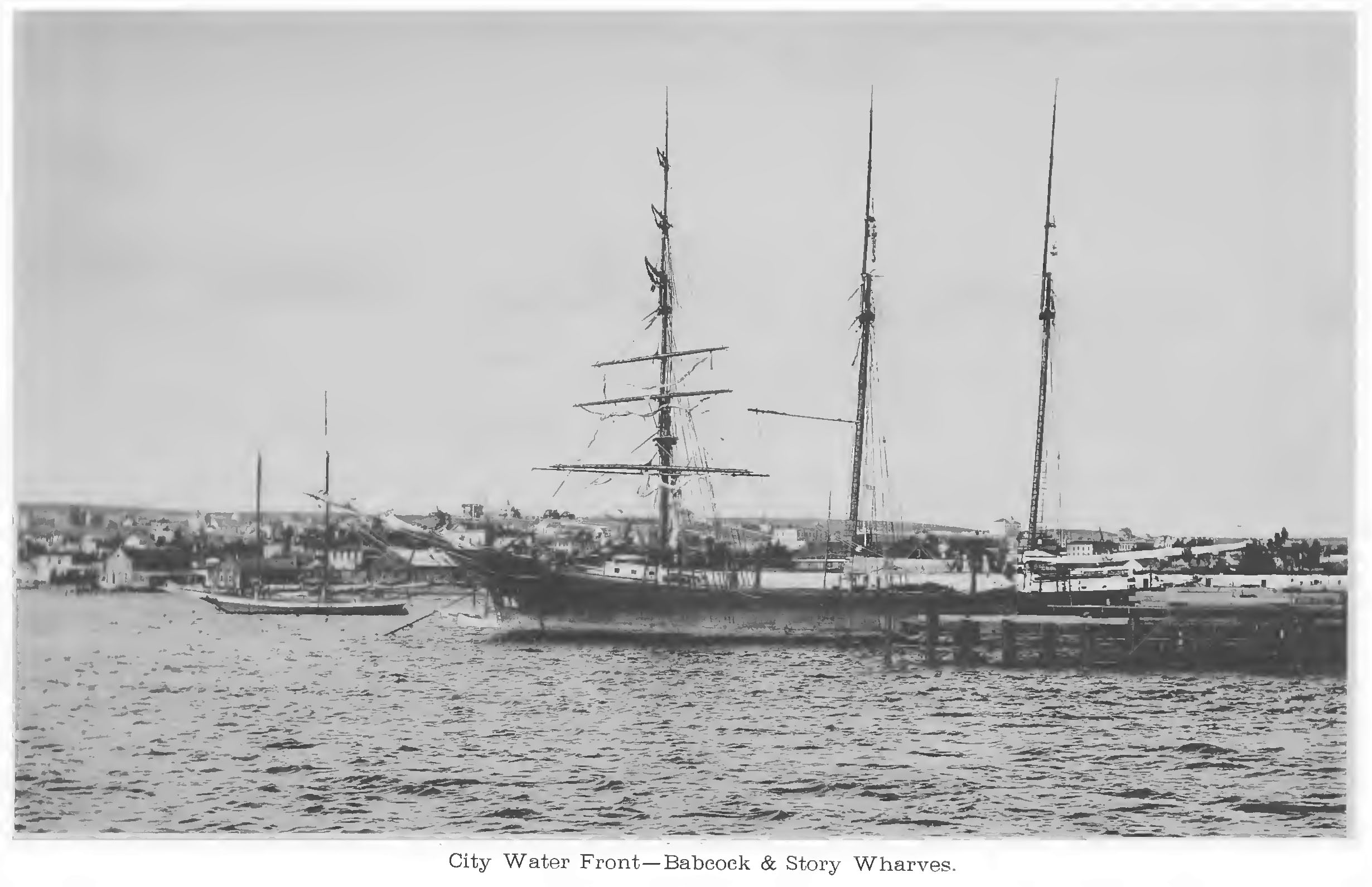
Photo of San Diego waterfront from the 1887 book, Picturesque San Diego, available from the Internet Archive.


Taking some time this week to highlight a great source of San Diego history that I’ve made use of and that all readers of this blog can use as well. The Internet Archive is a non-profit digital library with the stated mission of “universal access to all knowledge.” It provides free access to researchers, historians, scholars and the general public to tons of digitized historical materials, including (at last count) almost three million public-domain books (that’s books old enough to be beyond copyright) along with other media including videos and websites.

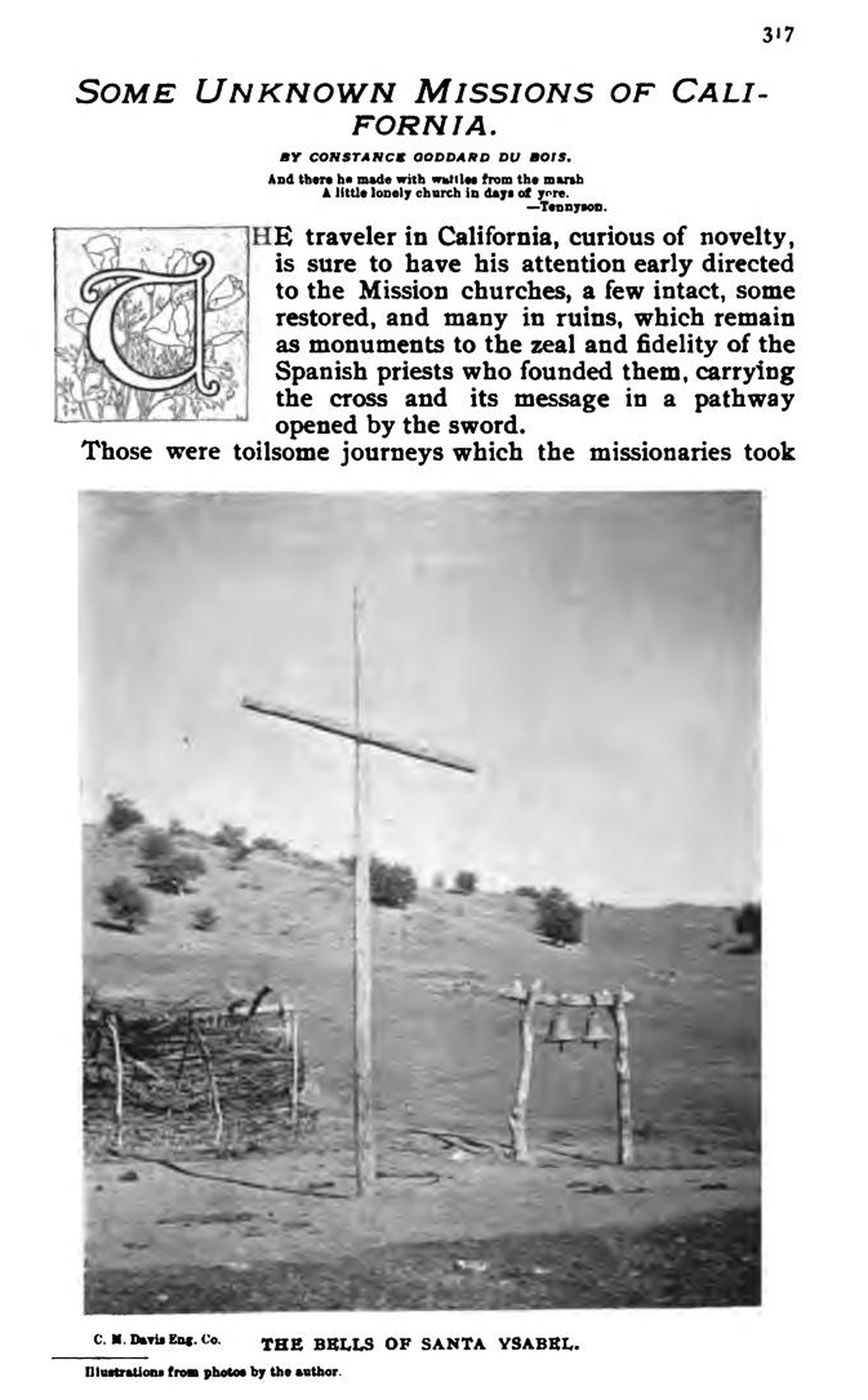
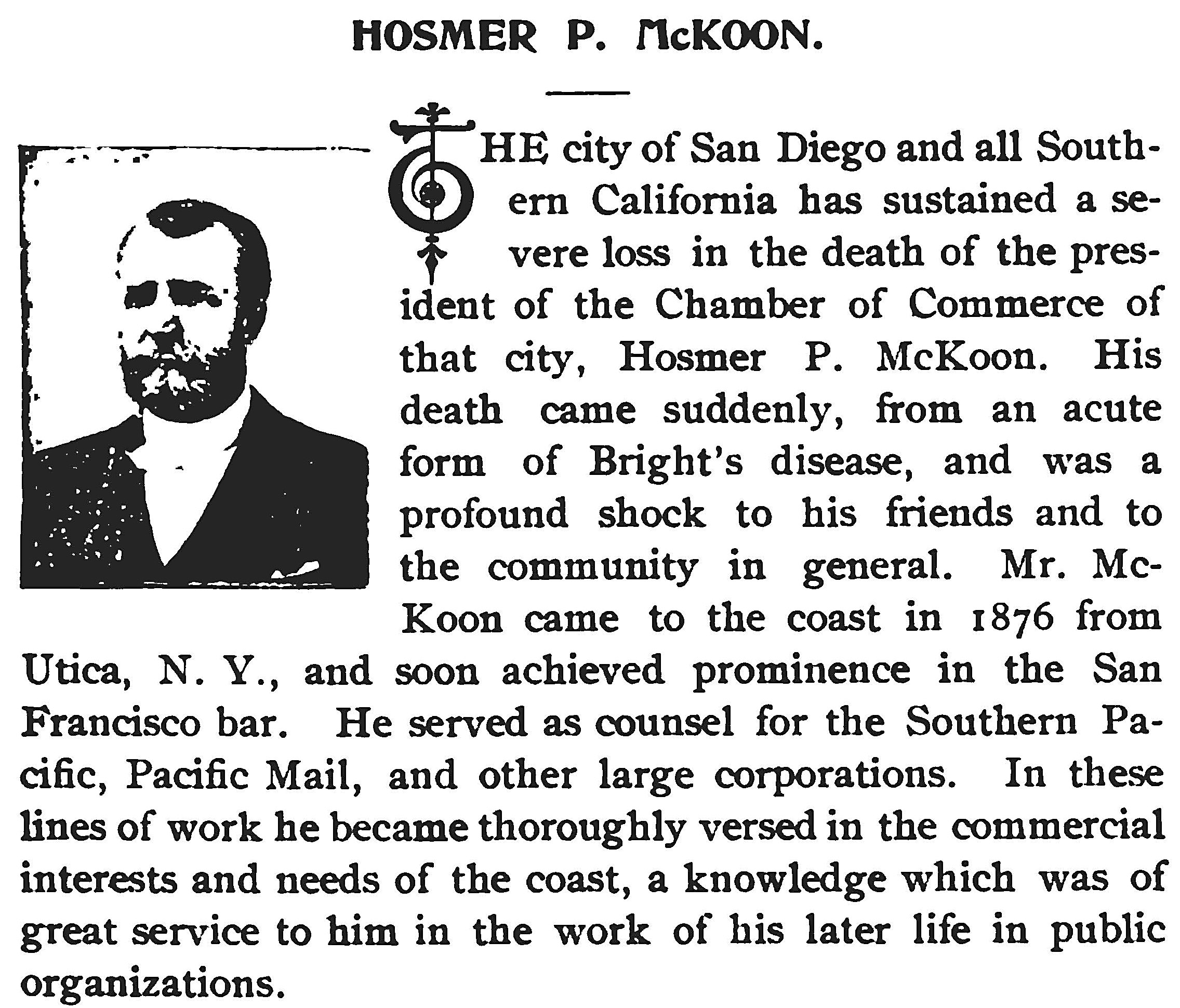
Among books I’ve been able to download from the website are Picturesque San Diego, originally published in 1887, and Birding On A Bronco, from 1896, as well as selections from the magazine Land of Sunshine, which ran from the mid-1890s through the early 1920s. Thanks to the dedicated work of the Internet Archive’s employees, I’ve been able to write about and share photos from these historic publications with this blog’s readers. Here are some more examples of photos from this great resource, two pages from Land of Sunshine magazine from 1899 and 1894, respectively :

landsunshine01unkngoog_0355


Hosmer P McKoon Land of Sunshine page

And I’ve just scratched the surface. I searched for “San Diego History” and got 461 hits, and that was just printed stuff! And that was just San Diego! Whoa, I’m starting to sound like the historians’ equivalent of one of those physicists on “The Big Bang Theory” talking about a Star Trek convention. Anyway, I’d heartily recommend that you all explore this storehouse of knowledge. The website is https://archive.org/index.php

Get Updates Automatically-Become A Follower of the San Diego History Seeker

You can get weekly updates of San Diego History Seeker automatically in your email by clicking on the “Follow” button in the lower right corner of the blog page. You’ll then get an email asking you to confirm. Once you confirm you’ll be an active follower.
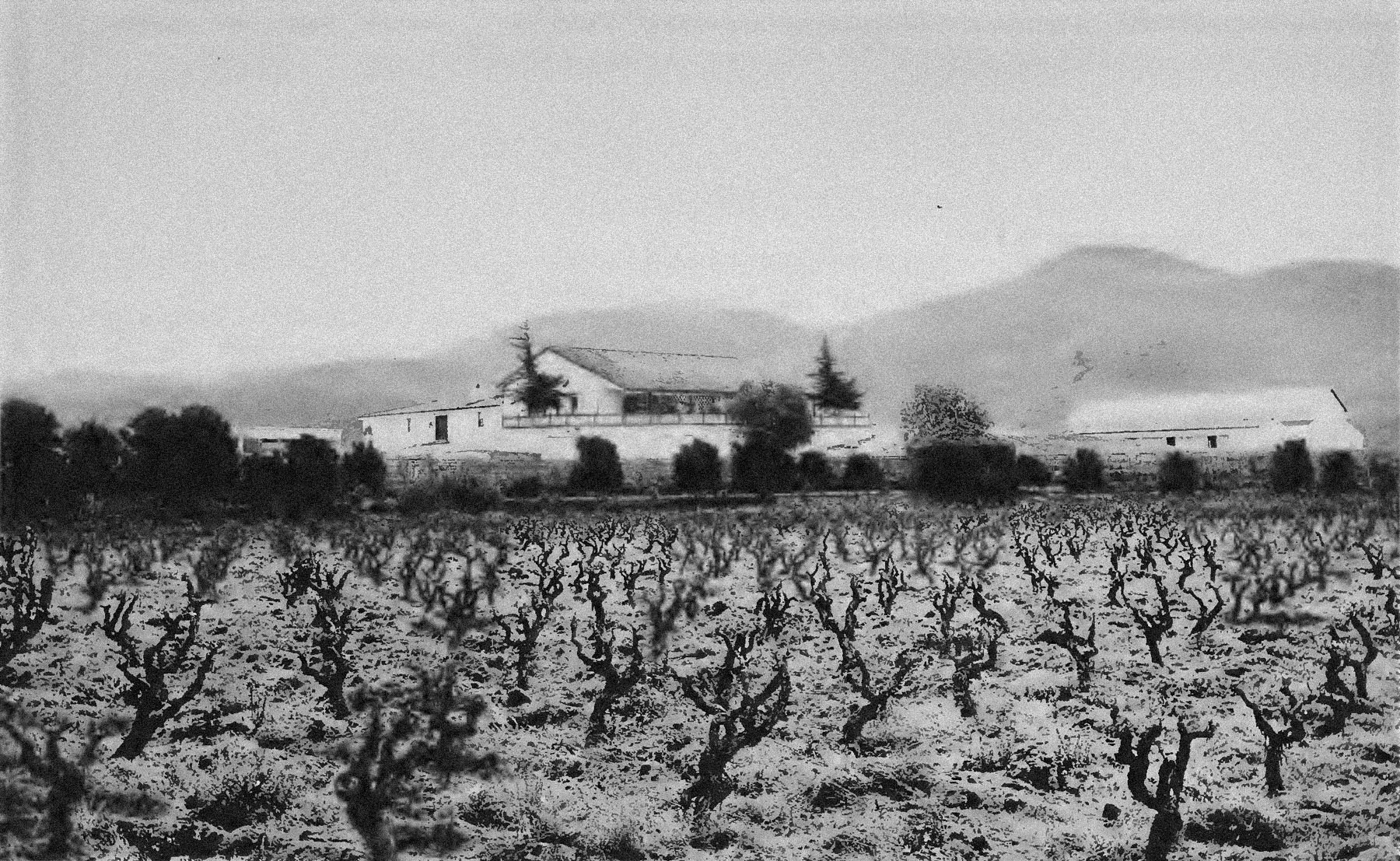
From Cowboys To Marines

Santa MargaritaRanch house and vineyards at Rancho Santa Margarita y Las Flores, 1887. From the book Picturesque San Diego.


“The celebrated Santa Margarita Rancho, of over 150, 000 acres (formerly the estate of the late Don Juan Forster), adjoins the San Luis Rey country on the west and north,” wrote Douglas Gunn in his 1887 book, Picturesque San Diego. “This vast tract is wholly under fence, and is devoted to cattle raising by its present proprietor, Richard O’Neill.”

Gunn described the great rancho as “one of the finest sections in the whole southern country, well watered, with a large proportion of first rate fruit, vine and farming land.”

Formally called Rancho Santa Margarita y Las Flores, it was the largest of the Mexican land grants, and would continue to function as a working ranch for over fifty years after Gunn described it, until the entry of the United States into World War Two would change it forever.

“Acquisition by the navy of 120,000 acres of rancho Santa Margarita y Las Flores in northern San Diego county was announced yesterday by Rear Adm. Ralston S. Holmes, 11th Naval district commandant,” began an article in the San Diego Union on March 14, 1942, a little over three months after Pearl Harbor. The article went on to say that “the property is to be used for housing and complete training facilities for all units and weapons of a marine infantry division plus an infantry regiment.”

In September, 1942, the Union ran a short article describing the feelings of Juan Cerda, a longtime handy man at Santa Margarita, over the changes taking place on the ranch.

“Juan has called the rancho his home for 31 years,” the article stated, “and now finds it hard to speak of his beloved home without tears filling his eyes.”

“Juan did everything on the rancho,” the article went on to state. “He could cut a cowboy’s hair, help the cook prepare a meal, help the cowboys round up cattle, repair a wagon or a plow, doctor a sick cow—almost anything.”

“It is understood the marines have offered Juan a job, but he is not sure he can bear to remain on the old rancho that is being converted into a government reservation.”

“It just isn’t home,” Cerda told a reporter.

It’s not clear whether Juan Cerda stayed at the place he knew as Rancho Santa Margarita y Las Flores, but thousands of marines and their families have called it home ever since its dedication in September 1942 under a new name: Camp Pendleton.

Sources for this post included historic San Diego newspapers, the books Picturesque San Diego by Douglas Gunn and The History of San Diego County Ranchos by R. W. Brackett, and the history section of the Camp Pendleton website: http://www.pendleton.marines.mil/About/HistoryandMuseums.aspx .

Get Updates Automatically-Become A Follower of the San Diego History Seeker

You can get weekly updates of San Diego History Seeker automatically in your email by clicking on the “Follow” button in the lower right corner of the blog page. You’ll then get an email asking you to confirm. Once you confirm you’ll be an active follower.
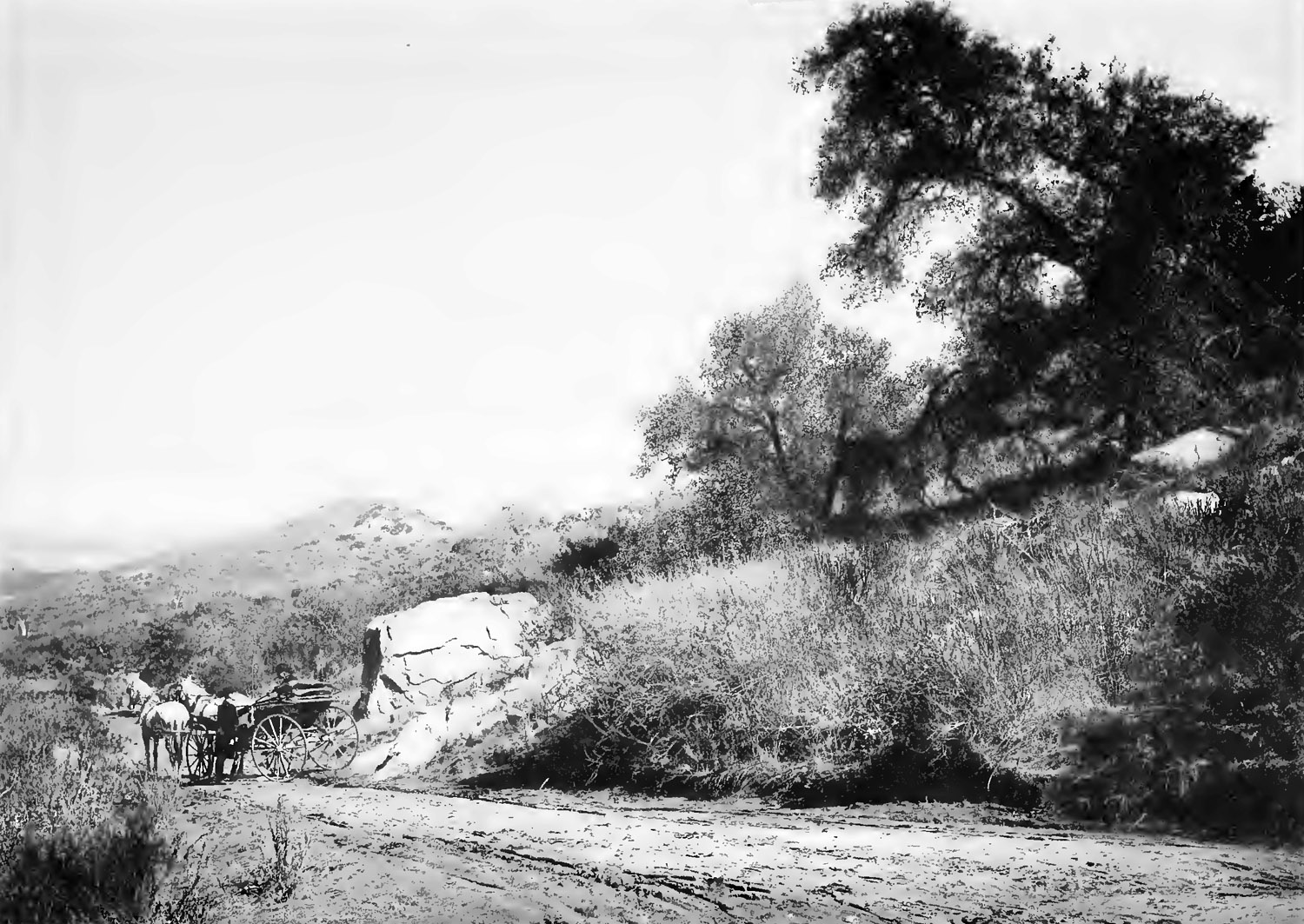
What’s In A Name? Bear Valley to Valley to….

Picturesque San Diego Bear Valley

Photo titled “View near Entrance to Bear Valley,” from the 1887 book, Picturesque San Diego.

“There will be some lively threshing done in the Bear Valley section this season,” began an item in the San Diego Union on May 7, 1874. “Sam’l Stripling & Co. are going to run a twelve-horse power steam threshing machine out there, and will do a ‘land-office business.’”

Yes, Bear Valley was a busy farming area in 1874, producing grain, hogs, bacon and honey among other things. The Striplings, Davises and Adamses were among a growing community of homesteaders in that section, 40 miles north of San Diego city on the way to Julian.

A little problem arose, though, when John T. Adams applied for a post office to be set up in the store he’d set up at his homestead. The U. S. Post Office Department’s Appointment Office replied to his application with the following statement, underscored: “The name of a post office must not be the name of any other office in the State: and you should aim to select a name not appropriated to any office in the United States.” In the margins of the application they wrote: “There is a Bear Valley in Mariposa County.”

Mr. Adams got his post office, and an appointment as postmaster, in October, 1874. But the name chosen for the office was simply, “Valley”. How much attention got paid to that name, other than on mail delivery days, isn’t clear. In 1876, when a local branch of the Grange was established, it was set up as the “Bear Valley Grange.”

In 1878, the p. o.’s name was changed to Valley Centre, and in 1887 that spelling was amended to the name we’ve known it by ever since, Valley Center.

Sources for this post include historic San Diego newspapers and the books, Picturesque San Diego by Douglas Gunn, and Once Upon A Time in Valley Center, compiled by the Friends of the Valley Center Library and the Valley Center Historical Society.

Get Updates Automatically-Become A Follower of the San Diego History Seeker

You can get weekly updates of San Diego History Seeker automatically in your email by clicking on the “Follow” button in the lower right corner of the blog page. You’ll then get an email asking you to confirm. Once you confirm you’ll be an active follower.


Going Over The Grade


#165 kent ranch,midland rd 1900Photo of Horace Kent ranch, circa 1900. Courtesy Poway Historical and Memorial Society.


The Kents were a pioneering farming family in the Poway Valley in the late 19th and early 20th centuries.

The “Poway Points” column in the Poway Press newspaper for Saturday, July 28, 1894 included this item: “H. Kent and sons, P.E. Kent, L. E. Kent and W. S. Kent, have been busily engaged in drying apricots. They expect also to have 15 or 20 tons of peaches to dry.”

Further down the same column noted that family patriarch Horace Kent “was in San Diego Wednesday with a load of magnificent peaches of the Alexander and Hale varieties. No place in California produces better peaches than Poway.”

Horace and all his sons, like many ranching families in the valley, made bi-monthly trips over the Poway grade into San Diego to sell their wares.

People who write about “sleepy” farming towns in the rural past should take a closer read of old newspapers and other accounts like the book, San Diego Back Country 1901, by Gordon Stuart. The book was self-published in 1966 by Stuart, a longtime Poway resident and charter member of the Poway Historical and Memorial Society.

Stuart was also a nephew of Lewis Kent, and accompanied his uncle on some of those trips over the Poway Grade, hauling produce in a wagon pulled by a team of horses.

The day before the trip, the family worked picking and packing the fresh peaches. Sometimes, they might also “take along a crate of chickens for sale; or a crate of eggs…. “

Over 60 years later, Stuart wrote “I can now hear Aunt Effie and Uncle Lew going through the chicken pens at night, with a lantern, selecting marketable fowls.”

Lewis Kent would awake at one o’clock the next morning, have breakfast “and start out; the horses going at a walking pace,” Stuart wrote, adding, “The horses were not much for the idea of being awakened at 1 a. m. There was nothing the horses could do in the city but sleep and eat. They could do that at home.”

It took seven hours to get up and over the grade before they arrived at “the first delivery stop, a grocery store in the suburbs up on University Heights.”

Stuart wrote that his uncle “always had his load sold before delivery, and that was that. If a dealer asked for a lug more than he had ordered the answer was, ‘Sorry.’ Uncle Lew played hard to get, and got away with it.”

“Most of the other growers peddled out their loads and were at a great disadvantage,” noted Stuart. “If all of their load was not sold, they dumped the remainder at a commission house, where returns were uncertain. On the open market, the grower received one cent per pound for his peaches–$10.00 for the load.”

After the last delivery had been made, Kent and his nephew would eat “a second breakfast” at one of the places around Fifth or Sixth and D Streets. Then they’d corral the wagon in a stable for the evening, sleeping under it or, if they’d done a little better, spending the night in a hotel before setting out the next day for the long journey home.

Get Updates Automatically-Become A Follower of the San Diego History Seeker

You can get weekly updates of San Diego History Seeker automatically in your email by clicking on the “Follow” button in the lower right corner of the blog page. You’ll then get an email asking you to confirm. Once you confirm you’ll be an active follower.