“STRANDED ON THE DESERT”

That was the headline on an article in the Poway Progress of November 30, 1895. That’s how the article began as well.

“Stranded on the desert, within twenty miles of Banning, is where J. Chilson of Fallbrook, has found his son-in-law, Bud Russell, and family,” stated the article, which attributed the story to a Fallbrook newspaper.

Russell and his family were part of a wagon train that left Oklahoma (then Oklahoma Territory) a few months previously, headed for California, the article said. They ran into some trouble, not specifically described other than to say their journey “has proved a most disastrous one to the whole party.”

“Just how nearly destitute they are is now known,” the article continued, “but on Saturday Mr. and Mrs. E. C. Shipley and J. Chilson left Fallbrook with two teams [of horses], to assist their relatives and bring them to Fallbrook.” The members of the stranded party were said to be “in good health, though their horses are broken down.”

The Shipleys, Chilsons and Russells were all part of the same extended family, descended from Oliver Cook and his wife Clarissa. They were also somewhat used to traveling together, if their family history is any indication.

After over 20 years as a successful farmer in Kansas, Oliver Cook, then in his late sixties, decided to pull up stakes and move to California in 1885. With Kansas in a recession and train fares reduced due to railroad price wars, Cook convinced most of his extended family to come with him. Arriving on the same train that day at the Fallbrook depot were Oliver and his wife Clarissa, daughter Clarissa and husband Elmore Shipley and their two sons, and daughter Mary Elizabeth and husband Joseph Chilson and their three children. Oh yes, and one of the Chilson’s children, daughter Mary Alice, came with her husband, Allen “Bud” Russell, and two sons.

The Russell branch of the family wasn’t quite finished with traveling, migrating to what is now Oklahoma in 1892. Although that didn’t work out too well, the Russells would re-establish themselves successfully in Fallbrook.

You can find out more about this very enterprising—and mobile—clan in my book, Valleys of Dreams, available for sale through this website.

Sources for this post included the archives of the Fallbrook Historical Society and the research of Susan M. Hillier Roe, third great-granddaughter of Oliver Cook.

Get Updates Automatically-Become A Follower of the San Diego History Seeker

You can get weekly updates of San Diego History Seeker automatically in your email by clicking on the “Follow” button in the lower right corner of the blog page. You’ll then get an email asking you to confirm. Once you confirm you’ll be an active follower.

History Happenings-Upcoming Events in the Local History Community

Art Animates Life and San Marcos Historical Society present a live train ride thriller, “Passage Into Fear,” September 19-21 at Heritage Park. A historical stage thriller in the tradition of Hitchcock and Christie, the play is set during World War I in recognition of the war’s 100th anniversary. Proceeds support the San Marco Historical Society’s educational programs at Heritage Park. Tickets $9 for adults, $5 for 15 and under. For tickets or further info call 760-716-0107 or visit www.smhistory.org .

Join members of the Santee Historical Society for their annual Barn Bar BQ and General Meeting Saturday, September 20 at 11 am at the society’s headquarters, the historic Edgemoor Barn, 9200 Magnolia Avenue. Speaker will be yours truly, the San Diego History Seeker, speaking on the lives of pioneer residents Hosmer and Fannie McKoon. $2.50 a plate for members, $5 a plate for non-members (you can join on the spot). RSVP by calling 619-449-2024.

Author Carol Fitzpatrick will speak on “Meriwether Lewis- Debunking the Myths of His Suicide,” at the next meeting of the Temecula Valley Historical Society, Monday, September 22, 6 p.m. at the Little Temecula History Center. Free and open to the public. For details call Rebecca Farnbach at 951-699-5148.
 

Raisins and Real Estate

In the first few months of 1894, San Diego County newspapers ran a number of articles about “the midwinter fair” and the county’s participation in it.

Its official name was the California Midwinter International Exposition, and it ran in San Francisco’s Golden Gate Park from January 27 to July 5, 1894.

A San Diego Union reporter, writing from San Francisco on the opening ceremonies, described perfect weather and throngs of people.

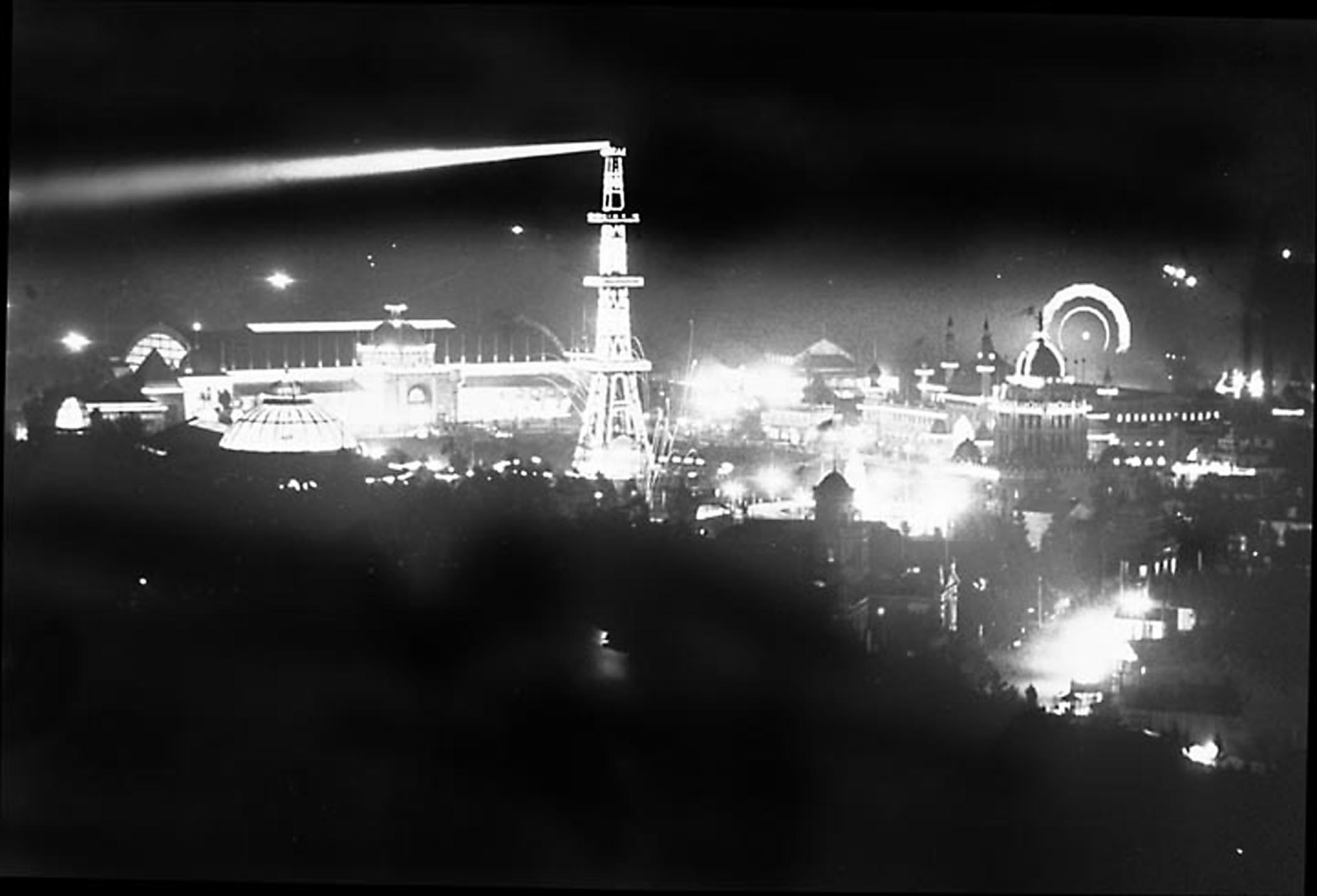
The fair covered 130 acres, with a grand court featuring “an electric tower over 250 feet in height,” surrounded by five main exhibition buildings dedicated to the state’s business, agriculture and art. Surrounding this main court were special buildings “erected by the different states, counties and concessions (erected at the cost of the states, counties or individuals) for their exclusive exhibits.”

Here’s a shot of the fair illuminated at night:

Fair picture

San Diego County was one of the prime exhibitors.

The February 3, 1894 Poway Progress, started its “CHAMBER OF COMMERCE AND MIDWINTER FAIR BULLETIN” by quoting from the San Francisco Chronicle:

“San Diego County has erected a model warehouse of dried fruits. This is the central figure of its display. Oranges, lemons, limes, raisins, olive oil and every variety of deciduous fruits are contained in this exhibit. The most southern county in the state vies with Siskiyou on the north in the display of apples…”

A miniature model of San Diego’s harbor was also part of the exhibit, according to the Progress, which also stated that a “Los Angeles resident” who’d visited both his city’s exhibit and San Diego’s pronounced San Diego’s “away ahead” of LA’s.

The San Diego Chamber of Commerce was a prime sponsor of San Diego’s exhibit. Chamber president Hosmer P. McKoon was also elected president of the “County Commissioners Club,” representing the various counties exhibiting at the fair.

The March 31 edition of the Poway paper noted that “April 10 will be San Diego day at the midwinter fair. Director Norcross of the chamber of commerce will go up the first week in April to assist Mr. Frisbie in setting up the big triumphal arch and completing other arrangements. President McKoon will deliver an address, there will be band music and several thousand packages of raisins bearing the compliments of San Diego County, will be given away.”

The free produce was obviously meant to accomplish more than satisfying visitors’ sweet tooths.

In early May 1894 a San Francisco newspaper reported that “The number of homeseekers who have studied the resources of the State on the fair grounds is incalculable.” The article went on to say that the fair “has been the means of attracting a great many actual purchasers and will attract a great many more. The best satisfied among those connected with the fair are not those who have come to sell goods, but the representatives of California’s counties, who at a big expense arranged exhibits to attract settlers.”

Some two million people passed through the fair’s gates during its run. That’s a lot of raisins.


Get Updates Automatically-Become A Follower of the San Diego History Seeker

You can get weekly updates of San Diego History Seeker automatically in your email by clicking on the “Follow” button in the lower right corner of the blog page. You’ll then get an email asking you to confirm. Once you confirm you’ll be an active follower.

History Happenings-Upcoming Events in the Local History Community

Open house at the Vista Historical Museum, 1-3 on Sept 13. Learn about the history of the museum, the former Rancho Minerva, and a little Greek culture. Hosted by three Girl Scouts earning their Silver Award. This is a community event and anyone can join. $7 donation includes tour, snack, presentation and patch. For further info call 760-630-0444.

Phil Goscienski, MD, the Stone-Age Doctor, will present a lecture on the health benefits of wine and chocolate followed by wine and chocolate tasting at the San Diego Archaeological Center, Saturday, September 13, 11 am – 2 pm. Admission: $25 for members  $35 for non-members (21 and over only). Space is limited and you must register in advance. Purchase tickets online at www.sandiegoarchaeology.org. To register for the event or for more information, please contact Cara Ratner at cratner@sandiegoarchaeology.org  or by telephone: (760) 291-0370.

Come help the Poway Historical and Memorial Society celebrate their 50th anniversary Sunday, September 14 from 9 am to 4 pm in Old Poway Park. There’ll be a museum open house, rummage sale, musical entertainment and speakers including yours truly, the San Diego History Seeker. I’ll also have a book table there. For details go to page 2 of the latest edition of the society newsletter, http://www.powayhistoricalsociety.org/newsletter/newsletter_14_fall.pdf .

Join members of the Santee Historical Society for their annual Barn Bar BQ and General Meeting Saturday, September 20 at 11 am at the society’s headquarters, the historic Edgemoor Barn, 9200 Magnolia Avenue. Speaker will be yours truly, the San Diego History Seeker, speaking on the lives of pioneer residents Hosmer and Fannie McKoon. $2.50 a plate for members, $5 a plate for non-members (you can join on the spot). RSVP by calling 619-449-2024.


From Bonfire to “Grape Day”

“THOUSANDS CHEER WHILE BONDS BURN”

That was the headline in the San Diego Union of September 10, 1905. It was reporting on a gala event the day before in the city of Escondido. On that day, Admission Day statewide, some 3,000 people gathered to witness the burning of canceled bonds from the Escondido Irrigation District, freeing residents from a collective debt that had hung over the community.

It was a very big deal. The size of the crowd tells you something when you realize that the actual population of the city of Escondido was in the range of 800 to 1,000 at the time. It was a small, young city, incorporated less than two decades before. A $450,000 bond issue passed in 1890 built a dam and reservoir for a steadier water supply crucial for a budding agricultural economy. But economic hard times locally and nationally had undermined the community’s ability to pay the debt. Negotiations led to a compromise balance which was finally paid off in 1905. That made the burning of the cancelled bonds a cause for public rejoicing.

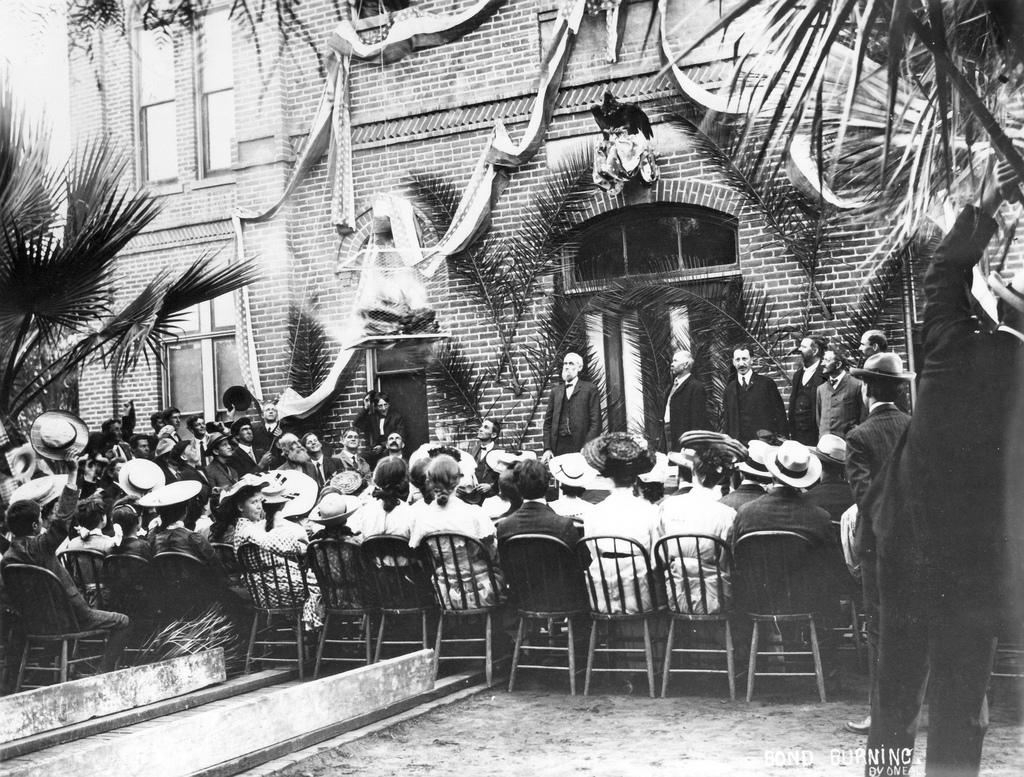
It was a party to which all southern California was invited. The Santa Fe railroad ran special trains from Los Angeles and San Diego. City bands from Escondido and San Diego were among the groups and individuals who provided musical entertainment. Mayor Sig Steiner joined other city officials in conducting the bond burning on the steps of the Lime Street School.

Here’s a photo of the event, courtesy of the Francis Beven Ryan historical collection in the Pioneer Room of the Escondido Public Library:

bond burning

Over the next couple of years, residents began gathering at the site every September 9 to picnic and commemorate what many called “Freedom Day.”

At the same time, one of the crops which began to flourish on Escondido’s irrigated soil was the muscat grape. A horticultural report on the sweetness of the local grapes inspired Sig Steiner, who’d stepped down as mayor in 1906 but remained an important business and civic leader. He proposed that every September, on or about the 9th, there should be a community celebration called “Grape Day.”

“The idea is capable of extended development,” Steiner told the San Diego Union in August, 1908, “and I have no doubt that ‘Grape Day,’ when once celebrated, will become an established annual event in the valley.”

The rest, as they say is history. And history repeats itself next Sunday, September 6, when Escondido once again celebrates its special day in Grape Day Park, which includes the site where the liberatory bond-burning was held. For details see “History Happenings” below.

Sources for this post included historic San Diego and Escondido newspapers, the Journal of San Diego History, and the website of the Escondido History Center.

Get Updates Automatically-Become A Follower of the San Diego History Seeker

You can get weekly updates of San Diego History Seeker automatically in your email by clicking on the “Follow” button in the lower right corner of the blog page. You’ll then get an email asking you to confirm. Once you confirm you’ll be an active follower.

History Happenings-Upcoming Events in the Local History Community

Grape Day, Escondido’s most historic event, takes place September 6. A 5K fun run starts at 7:30, followed by a parade down Grand Avenue, culminating in the festival in Grape Day Park from 9:30 to 4. Free event includes grape stomping, an entertainment stage, vendor booths, fun zone, free grapes courtesy of Jimbo’s Naturally, a wine and craft beer tasting pavilion and lots more. For more info visit http://www.escondidohistory.org/index.html .

Open house at the Vista Historical Museum, 1-3 on Sept 13. Learn about the history of the museum, the former Rancho Minerva, and a little Greek culture. Hosted by three Girl Scouts earning their Silver Award. This is a community event and anyone can join. $7 donation includes tour, snack, presentation and patch. For further info call 760-630-0444.


Magical History Tour

Just returned from a 17-day motoring vacation that took us up along the Eastern Sierra, into a little of Nevada, then eastern Oregon, then through the Columbia River Gorge, then back over to Carson City and Virginia City, Nevada, past Lake Tahoe, and down the 5 to home.

Of course, as history seekers, my wife and I always want to check out historic sites wherever we go. And this trip turned out to be a sort of “Magical History Tour” (apologies to the Beatles) as we discovered some impressive sites.

We visited places like the Douglas County Historical Museum and Cultural Center in Gardnerville, Nevada (three stories full of exhibits in a former school building), Sumpter Valley Dredge State Heritage Area in Oregon (where we toured a dredge the size of a river boat), and the Grant County Historical Museum in Canyon City, Oregon (with thousands of local history items on display).

History is history, and San Diego County shares many historical parallels with other western regions. So we’d like to share some photographic and narrative highlights of two historic sites we visited.

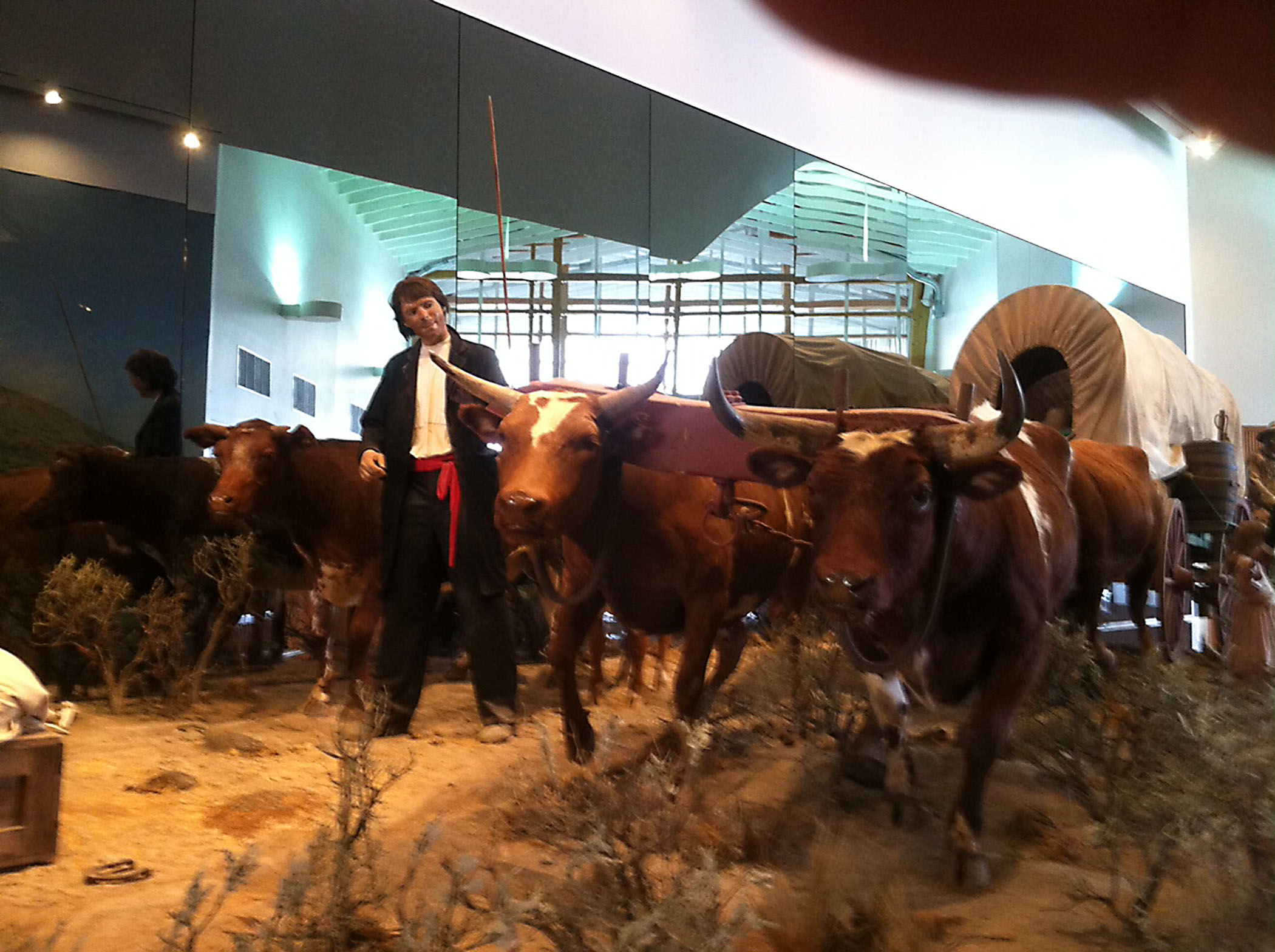
This is a photo of one of the exhibits at the National Historic Oregon Trail Interpretive Center (NHOTIC) in Baker City, Oregon.

oregon trail

You pass through a series of lifesize recreations illustrating pioneer travels and the settlement of Oregon. The exhibits also include recordings taken from the diaries of pioneers who came over the Oregon Trail. The NHOTIC, which is run by the Bureau of Land Management of the U.S. Department of the Interior, also offers living history demonstrations, interpretive programs, multi-media special events, and over four miles of interpretive trails. For further info, check out their website: http://www.blm.gov/or/oregontrail/ .

Baker City is also home to the Baker Heritage Museum. The area in and around Baker City was the scene of a gold rush in the late 1880s and 90s. By 1897 the Baker Gold District had 513 mines and Baker City, dubbed “Queen City of the Mines,” was the third largest city in Oregon and the fastest growing community in the Old West. It was a center not only for gold, but for the agriculture and timber industries as well.

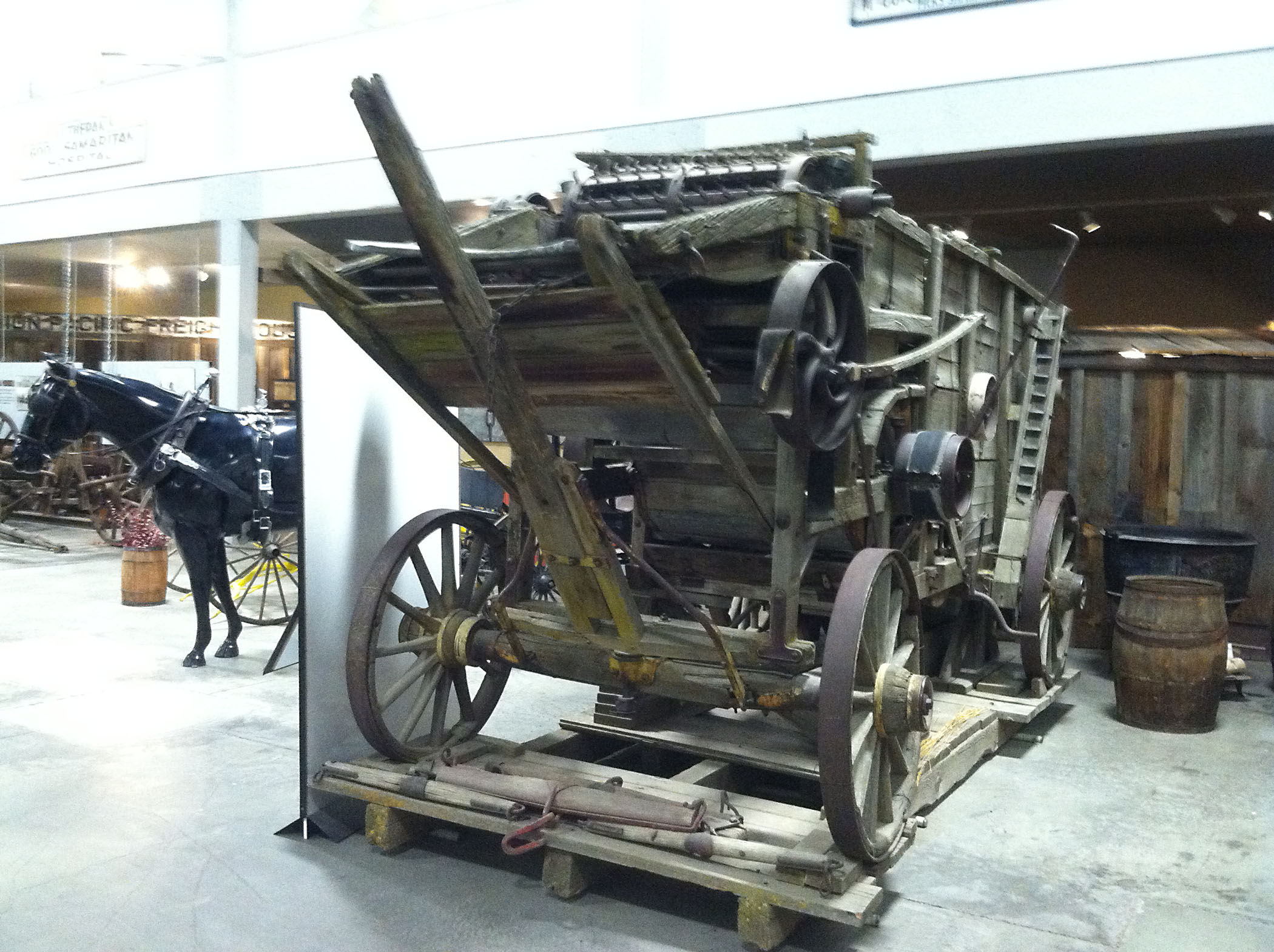
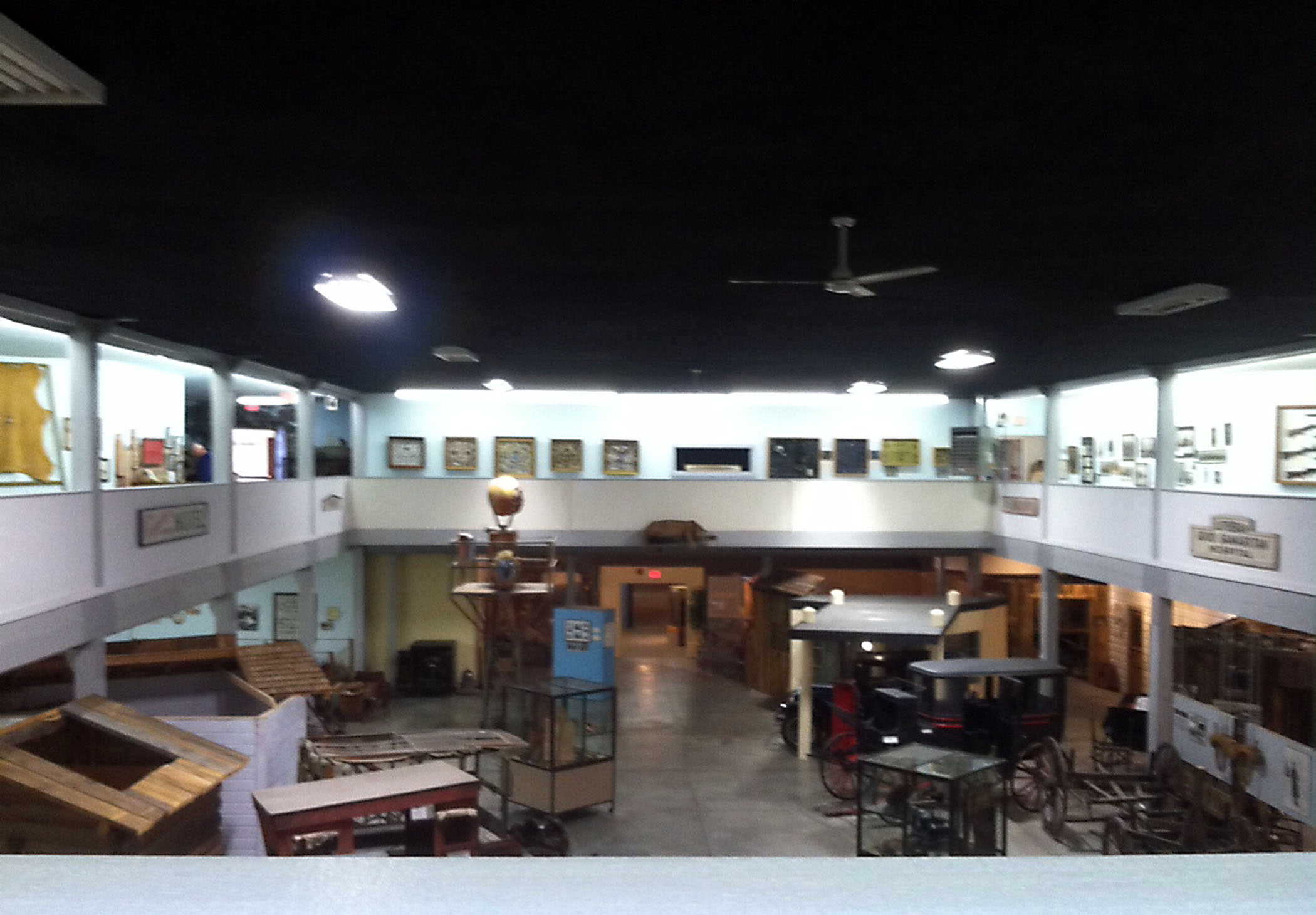
The museum is in a former natatorium building saved from demolition by the local historical society. The building is stocked with all kinds of exhibits related to the local history, including two stagecoaches and a threshing machine, as well as all manner of clothing and household items, all donated by the descendants of pioneer families.

Here’s a photo of the threshing machine:

thresher


And here’s a view of the main exhibit floor from the museum’s upstairs balcony:

Baker museum inside view

We found the story of the building’s rescue and transformation and the strong participation by the local community to be especially inspiring when we found out that the total population of Baker City and County is 16,000. An important lesson here for San Diego County.

Here’s the Baker Heritage Museum website: http://www.bakerheritagemuseum.com/ .

Get Updates Automatically-Become A Follower of the San Diego History Seeker

You can get weekly updates of San Diego History Seeker automatically in your email by clicking on the “Follow” button in the lower right corner of the blog page. You’ll then get an email asking you to confirm. Once you confirm you’ll be an active follower.

History Happenings-Upcoming Events in the Local History Community

“Merton and Stowe: Lost Towns of the Poway Valley,” is the subject of a talk by yours truly, aka Vincent Rossi, the San Diego History Seeker, Wednesday, August 27,11 am-Noon, at the North County Inland Center. The center is at Temple Adat Shalom, 15905 Pomerado Road, Poway. For further details call 858-674-1123.

Grape Day, Escondido’s most historic event, takes place Saturday, September 6. A 5K fun run starts at 7:30, followed by a parade down Grand Avenue, culminating in the festival in Grape Day Park from 9:30 to 4. Free event includes grape stomping, an entertainment stage, vendor booths, fun zone, free grapes courtesy of Jimbo’s Naturally, a wine and craft beer tasting pavilion and lots more. For more info visit http://www.escondidohistory.org/index.html .

Open house at the Vista Historical Museum, 1-3 on Saturday, Sept 13. Learn about the history of the museum, the former Rancho Minerva, and a little Greek culture. Hosted by three Girl Scouts earning their Silver Award. This is a community event and anyone can join. $7 donation includes tour, snack, presentation and patch. For further info call 760-630-0444.


The Townsend Club

For a number of months in the year 1935, in the midst of the Great Depression, “Townsend Club Activities” was a regular column in Vista’s weekly newspaper, The Vista Press.

“The Townsend chicken dinner at the Community church on Monday evening was an outstanding success, both financially and in the number attending,” began the column for October 10, 1935. “The committee in charge had to order the doors closed at 7:30, as people continued to stream in.”

The columns describe dinners and musical events among club members, but the social movement was also dedicated to a public policy goal. The official name for the movement was Townsend Old Age Pension Clubs.

It began in 1933 with a Long Beach physician, Francis Townsend, then in his early sixties, who was moved by his observations of elderly people living in poverty after a lifetime of work. He proposed a plan for a guaranteed federal pension of $200.00 per month to every person over the age of 60. He proposed the system not only to keep older people out of poverty but as a means of creating more job opportunities for unemployed younger workers.

That idea clearly resonated with many of the Vista Press’s readers, its publisher, and leaders of the local and regional agricultural community. An example can be found on the paper’s front page on January 3, 1935. At the top of the page, along with two articles on an upcoming election of directors for the Vista Irrigation District, was another article headlined “The Future of American Democracy.”

The article reprinted the text of an address given not long before at Whittier College by C.C. Teague, then president of the California Fruit Growers Exchange.

Teague wrote that in his opinion, “a democracy…cannot stand the strain of long-continued unemployment of a large percentage of the people and must find some way where this condition can be avoided if it is to live.” He then called for a “compulsory” retirement system to pension off older workers and create employment for younger ones.

The “Townsend Club Activities” column described activities jointly sponsored by clubs in Vista, San Marcos, and Oceanside. They, along with clubs from San Diego city and elsewhere, sent delegates to a Los Angeles rally of 10,000 in late September 1935 and a national convention in Chicago in late October which included a nationally broadcast radio address by Dr. Townsend.

The Social Security Act was passed by Congress and signed by President Franklin Roosevelt in August, 1935, in obvious response to the growth of the Townsend Clubs and similar campaigns.

Sources for this post included the websites of the Vista Historical Society and the Social Welfare History Project.

Get Updates Automatically-Become A Follower of the San Diego History Seeker

You can get weekly updates of San Diego History Seeker automatically in your email by clicking on the “Follow” button in the lower right corner of the blog page. You’ll then get an email asking you to confirm. Once you confirm you’ll be an active follower.

History Happenings-Upcoming Events in the Local History Community

The San Marcos Historical Society offers tours of the historic Cox and Bidwell houses Tuesdays, Thursdays and Saturdays at 2 and 3 p.m. or by appointment. For further info visit http://www.smhistory.org/historic-home-tours .