How Water Changed San Diego

Access to a steady water supply made all the difference in making San Diego County livable. Vincent Nicholas Rossi, the San Diego History Seeker, will show how it happened in his new Oasis class, “How Water Changed San Diego.” Join him Friday, August 23rd at 1 p.m. ­­at Oasis Grossmont Lifelong Learning Center or on Tuesday, August 27th at 10 a.m. at Oasis’ Rancho Bernardo campus. Click on the link below to sign up:

https://san-diego.oasiseverywhere.org/?_presentershortname=Rossi,%20Vincent

Link To A Name From Our History

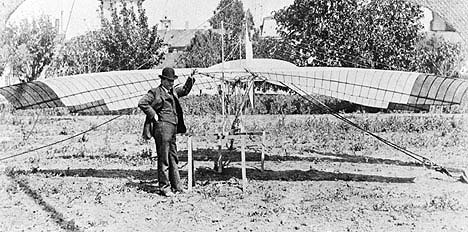
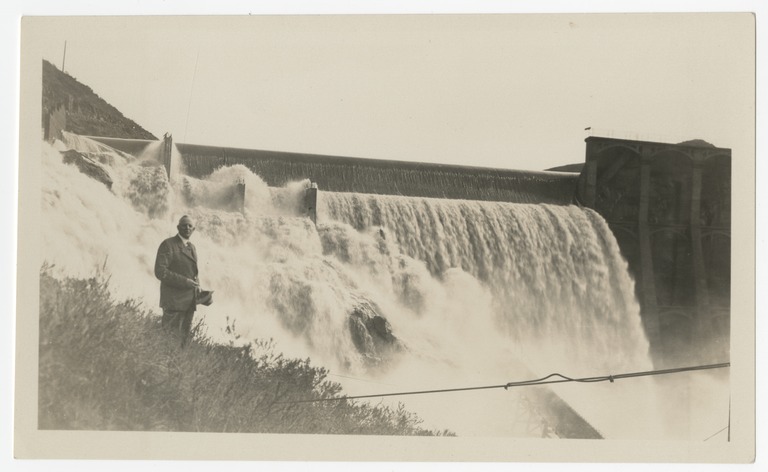
Ed Fletcher was a major mover and shaker in San Diego city and county history, remembered today by Fletcher Hills and Fletcher Parkway. The photo below shows Fletcher standing in front of the open spillway at the Lake Hodges Dam during a release of water from the dam’s reservoir in the early 1920s, shortly after the dam’s completion:

Fletcher was then the president of the San Dieguito Mutual Water Company, which built the dam. That company was one of a number of ventures which he led during his life to promote water development in San Diego County, efforts which played a big role in making San Diego County livable.

The photo is part of an archive of Fletcher’s private papers now held in the UCSD Library. The majority of those papers have been digitized, and so are available for public viewing. It’s a great source for history seekers. See the link below to check it out.

https://library.ucsd.edu/dc/collection/bb55647135

A Walk Through History, Natural and Human

On a recent Sunday morning, in need of some time away from work and home, my wife and I decided to talk a short walk on a nearby trail. Just a short drive from our neighborhood is the Mule Hill Historic Trail, adjacent to the Sikes Adobe Historic Farmstead. The trail and the farmstead are part of the San Dieguito River Park, which was created in 1989 to preserve a chunk of the San Dieguito River watershed, from Volcan Mountain near Julian to Del Mar on the coast, as undeveloped greenspace.

The Mule Hill Historic Trail offered us some great examples of history, both natural and human.

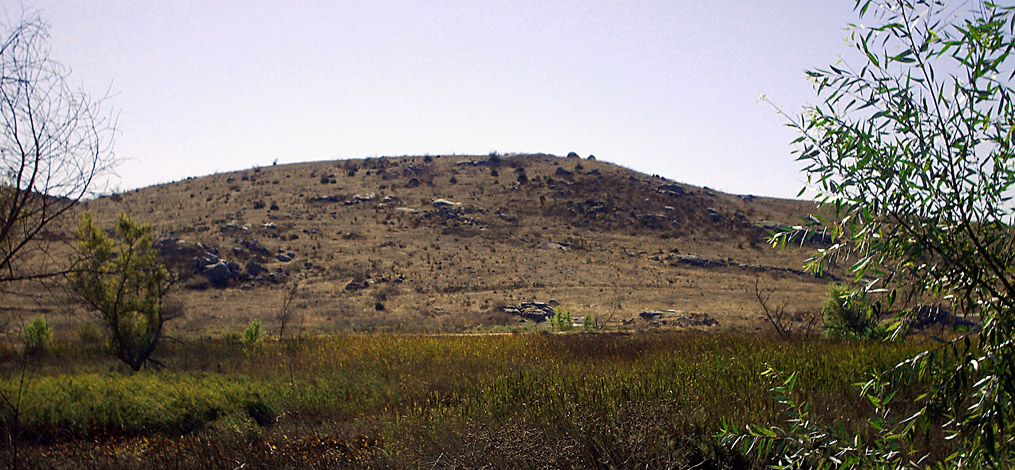
Here’s an example of the natural part:

The bolders and flowering vegetation offer a glimpse of what all of San Diego County looked like for thousands of years.

And within a mile or so on the same trail is the scene of some significant human history:

The stone wall and historical markers look out on Mule Hill, site of the climactic final stage of the Battle of San Pasqual in 1846, during the Mexican-American War. The US victory in that war in 1848 would transform California from a Mexican province to an American state.

A lot of history in a short hike. Check it out!

150 Years Ago This Month in San Diego

Readers of this blog know I often find old newspaper articles can offer historical snapshots of our region. So I decided to look at what was being reported in San Diego newspapers exactly 150 years ago to the month. On page 3 of the April 22, 1874 issue of The San Diego Union, within a routine report of the previous night’s meeting of the San Diego Board of Trustees (today’s City Council), it noted board approval for the purchase of a new fire engine. The article quoted one trustee as saying he had “heretofore been opposed to appropriating any money for this purpose” as “he did not  think the city was quite ready for it.” (To see the original wording from the board meeting, readers can go online to sandiego.gov/digitalarchives and select 1850-1874 Minutes and Ordinances, p.411, Image 445).

“But now,” the article continued, “the water had been brought into the streets, and several persons had  put in fire plugs; others were preparing to do so.”

“Under these circumstances,” the Union article continued in reference to this particular trustee, “he was prepared to modify his opinions; the time had now come when a reasonable expenditure for fire apparatus could properly be made.”

Only a year before, in January 1873, had the San Diego Water Company, the city’s first, been incorporated. It started by digging a well at 11th and B Streets downtown. Over the next decade and a half, under contract to the city, the company would dig 11 more wells in the San Diego River and create two reservoirs to supply a growing city.

And that’s just the start of the story. Or, you could say, if you’ll excuse the pun, the start of the whole dam story.

In addition to historic San Diego newspapers and the San Diego city archives, sources for this post included the 1908 book History of San Diego: 1522 to 1908, by William E. Smythe, the 1922 book City of San Diego and San Diego County: The Birthplace of California, by Clarence Alan McGrew, and the 2023 book, To Quench a Thirst:A History of Water in the San Diego Region, by the San Diego County Water Authority.