“…a thorough woman of business…”

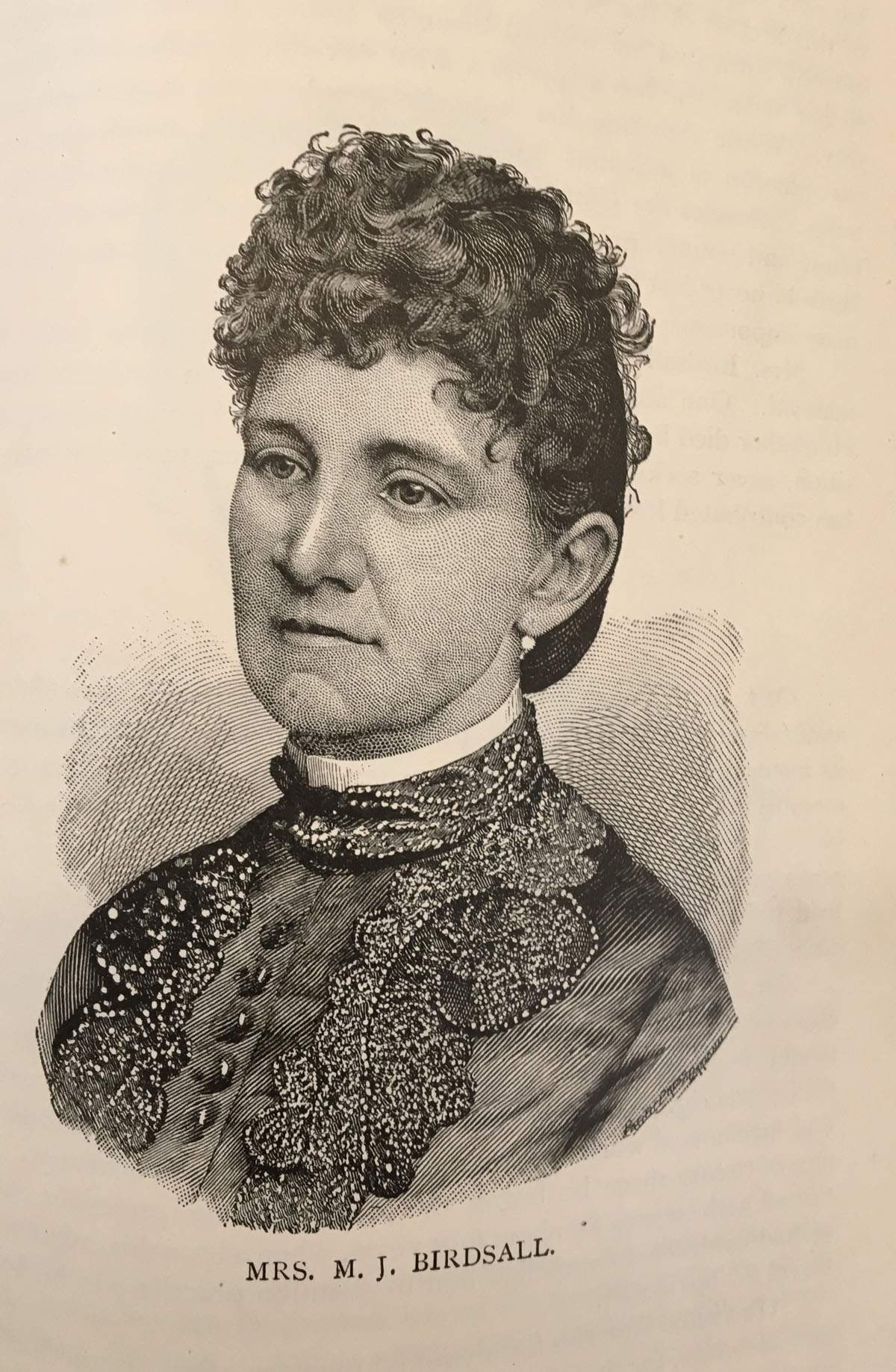
That was one of the phrases used in a biographical sketch of Mary J. Birdsall which appeared in a book published in 1888 entitled: The City and County of San Diego Illustrated And Containing Biographical Sketches of Prominent Men and Pioneers.

Here is a drawing of Mrs. Birdsall from the book:

Birdsall

The book’s title is a mouthful in itself, which was the style of a lot of volumes in that era, especially those written to salute a certain region and those considered its most notable citizens.

The book nevertheless offers an interesting snapshot of San Diego in 1888, and of this one particular person’s life. That’s especially true from the perspective of the reader in 2016. Note the reference in the title to “Biographical Sketches of Prominent Men and Pioneers.” There are actually 47 bios presented in the book, but Birdsall is the only woman listed.

Born in Missouri but raised in Tennessee, Birdsall is described as having been “educated at the Young Ladies Model School in Summerville, Tennessee” from which “she graduated at the age of fifteen, and within a year was married.” She and her husband came to California during the 1860s, first to northern California and then to San Diego in 1870, a time when “what is now the city of San Diego contained but a few board houses.”

While she started a restaurant called the Home “in company with her husband,” within a few sentences Mary is clearly starting a larger business independently. “In 1881,” states the book, “she began the erection of the fine house at present occupied and managed by her, the Commercial Hotel on the corner of Seventh and I Streets.”

A check of historic San Diego newspapers bore out the change in her life, with coverage in 1882 of her suing her husband for divorce on the grounds of “habitual intemperance.” That coverage soon gave way to descriptions of her as the proprietor of a well-run hotel and an active businessperson and civic leader.

“Being cast upon her own resources,” the bio concluded, “Mrs. Birdsall cultivated her natural business ability, and by strict attention to her duties she has acquired a most enviable position in the community. While directing her hotel in an admirable manner she has, by the exercise of judicious investments, acquired a handsome competency. Besides the Commercial Hotel she owns considerable city real estate and county property.”

Here’s to one strong woman whose story made it into print.

Get Updates Automatically-Become A Follower of the San Diego History Seeker

You can get updates of San Diego History Seeker automatically in your email by clicking on the “Follow” button in the lower right corner of the blog page. You’ll then get an email asking you to confirm. Once you confirm you’ll be an active follower.

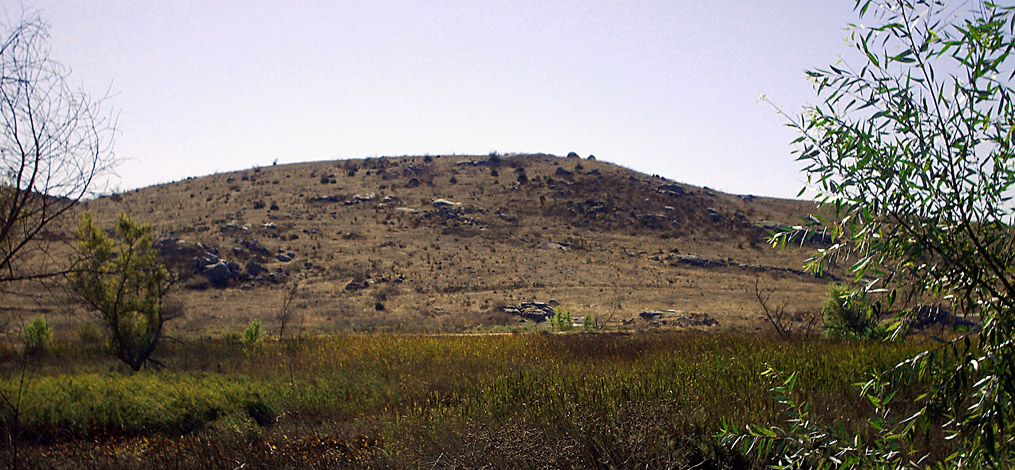
Olive Days in Fallbrook

“The finest olives I have ever tasted I ate at the San Diego Mission; and the olives of this State, when carefully pickled, are far superior to those we get from France or Spain.”

Journalist Charles Nordhoff, wrote those words in his book, California: A Book for Travellers and Settlers, published in 1873.

Nordhoff was on to something.

“During the period 1913-1915 olives were the largest cash crop in the Fallbrook area,” wrote the late Don Rivers of the Fallbrook Historical Society in a 1998 essay which can be found in the society’s archives.

One of the early centers of olive production in the Fallbrook area was the Red Mountain Ranch, which was located just northeast of Fallbrook at the top end of Live Oak Canyon. Here’s a photo of the ranch house and surrounding groves in 1892:

Red Mountain 1892 Barker-Kelsey collection

Photo credit Fallbrook Historical Society.

The ranch harvested 150 tons of olives in 1910, according to an article in the March 1911 issue of the newspaper Fallbrook Enterprise.

By the middle of the twentieth century the olive would be eclipsed in local importance by citrus and avocados. Today scattered groves of olives remain, along with street names like Olive Hill Road and Olive Avenue, as reminders of Fallbrook’s olive days.

In addition to the Nordhoff book, sources for this post included the archives of the Fallbrook Historical Society.

Get Updates Automatically-Become A Follower of the San Diego History Seeker

You can get updates of San Diego History Seeker automatically in your email by clicking on the “Follow” button in the lower right corner of the blog page. You’ll then get an email asking you to confirm. Once you confirm you’ll be an active follower.

July 29, 1846

This month marks the 170th anniversary of the first raising of the U. S. flag over the city of San Diego. San Diego was then still a part of Mexico, which was at war with the United States. An American naval fleet patrolling off the California coast dispatched one of its ships, the Cyne, to sail into San Diego Bay and take possession of the town.

After encountering no resistance from a Mexican brig anchored nearby, the captain of the Cyne sent a party of sailors and marines ashore in two boats. The party was commanded by Navy Lieutenant Stephen Clegg and Marine Lieutenant William Maddox.

The sailors and marines landed at La Playa (part of today’s Point Loma] and walked five miles into Old Town, again encountering no opposition. “There had been no Mexican soldiers in San Diego for over nine years,” according to Ed Scott in his book, San Diego County Soldier-Pioneers.

Fighting would take place in subsequent months, but on that day the flag of the United States was raised in front of the Casa de Estudillo with no resistance. The log of the Cyne itself records the event pretty matter-of-factly: “At 9 p. m. the launch returned and at 10:50 the Alligator [second of the two boats] with Lieutenant Rowan, after taking possession of San Diego and hoisting the American flag, leaving all our marine guard, under Lieutenant Maddox, on shore to defend the flag and town.”

In addition to the Scott book, information for this post came from the book, San Diego, A Chronological & Documentary History,1535-1976 compiled and edited by Robert Mayer.

Get Updates Automatically-Become A Follower of the San Diego History Seeker

You can get updates of San Diego History Seeker automatically in your email by clicking on the “Follow” button in the lower right corner of the blog page. You’ll then get an email asking you to confirm. Once you confirm you’ll be an active follower.

Winners and Losers in U. S. Political History

I’ll be giving a class on “Winners and Losers in U. S. Politics” for San Diego OASIS. It’s Wednesday, July 13 at 1 p. m. at the San Marcos Branch Library, 2 Civic Center Drive. I’ll be talking about how, in the first 150 years of our nation’s history, our “two-party system” didn’t always consist of the same two parties. That history offers some important lessons for our political decisions today.

Admission to this class is free. It’s class number 709 on the OASIS online catalog. Go to https://www.oasisnet.org/San-Diego-CA/Classes and type in “709.”


The Impact of One Country Schoolteacher

Bonsall School House

The “Little Old Bonsall Schoolhouse.” Photo credit Peggy Rossi.

The Bonsall Union School District operates four schools today. However, if you mention the “little old Bonsall Schoolhouse” to most local residents they’ll know which school you’re talking about: the one-story wood-frame building with the bell tower in front on Old River Road.

The building still stands today, being restored as a county historic site by the school district with the help of the Bonsall Woman’s Club. In 1984 the club’s Landmarks and History Section published the book The Little Old Bonsall Schoolhouse, which helped secure the building’s status as a history site and is the source of much of what’s known about the school.

The book noted that the school first opened in August 1895 as the Mount Fairview School, the community being known as Mount Fairview at the time. The first teacher hired was Mrs. Elise Averill, who received “”$60.00 per month.” There were four schools comprising the district at the time, and the book observed that “It is interesting to note that salaries had not increased since 1882 and, in fact remained the same until 1905, when they were increased $5 to $10 per month, depending on circumstances. It would take 37 years (1882-1919) for teachers to earn $90.00 per month…”

I can’t say for sure whether the district’s salary policy had anything to do with it, but by the early 1900s, Mrs. Averill had moved to Arizona, where she taught English and Physical Culture at the state Normal School, which is now Arizona State University.

She would return to California within a few years to teach in Oceanside, but not before she made a unique contribution to her adopted state. She collaborated with her sister to compose a song, “Hail to Arizona! The Sun-Kissed Land,” which was adopted by the Territorial Legislature (Arizona being still a territory then) as the territory’s official anthem. It would remain Arizona’s official song until 1919, according to a May 2015 article in The Arizona Republic.

Elise Reed Averill retired after decades as a schoolteacher in San Diego County and died here in 1958 at the age of 104. While the lyrics she wrote to a state anthem may be the closest to celebrity status she ever got, perhaps generations of educated students from Bonsall to Phoenix to Oceanside are her greatest legacy.

Get Updates Automatically-Become A Follower of the San Diego History Seeker

You can get updates of San Diego History Seeker automatically in your email by clicking on the “Follow” button in the lower right corner of the blog page. You’ll then get an email asking you to confirm. Once you confirm you’ll be an active follower.