These Kids Today…Oh, Wait A Minute

The entire student body marched out of school and went on strike to protest the policies of the local school board. Sound like Berkeley in the 1960s? No, it was the city of San Diego in June 1918.

The walkout of 1,500 students, virtually the entire student body of San Diego High School, was immediately caused by the abrupt firing of 19 teachers by the five-member Board of Education. But pressure had been building since the previous school year, when the board, with three newly elected members taking the lead, dismissed school superintendant Duncan McKinnon, who’d proved popular with teachers and students as well as most city officials.

The board followed that up with a questionnaire sent to all city teachers asking their opinions of their jobs. This questionnaire was prepared by the board’s “teachers committee,” whose membership included no teachers. City teachers at that time served under year-to-year contracts. At a mass meeting in response to the questionnaire, 91 of the 94 teachers on staff chose to respond with a collective statement rather than individually. Seventy-seven of them eventually signed a reply which was sent to the board.

On June 6, 1918, the board mailed dismissal notices to 19 teachers. Among those dismissed were Arthur Gould, principal of San Diego High School, and Pauline Gartzmann, who had been secretary of the teachers meeting which had approved the joint reply to the school board.

The response by the students was to organize a walkout. Led by a disciplined executive committee, they marched downtown and rallied in Balboa Stadium. They also drew up a petition to the board demanding an explanation for the dismissals. And they called a strike to last until their questions were answered.

Their activities culminated a few days later in another rally at the stadium where the students were joined by some 4,000 members of the general public sympathizing with their demands. Public supporters included organizations like the Rotary Club and Chamber of Commerce.

The strike lasted through the end of the school year on June 21. City newspapers reported the communications of both sides, included a statement from the school board refusing to recognize “the insurrection and the alleged resolution of the so-called student body of the High School.”

The matter may have been clinched on June 22 when The San Diego Union published a letter from the board claiming the “several among those” dismissed “were under surveillance by the authorities for Pro-Germanism and those teachers were dropped for that reason.”

This was in the midst of the First World War. However, letters of inquiry sent by supporters of the students to government law enforcement and intelligence officials revealed that none of the teachers had been under investigation.

Students returned for the new school year on August 31. Some of the teachers had been reinstated, but most had accepted employment elsewhere or had entered defense work, according to Robert Heilbron in his essay, “Student Protest At Its Best: San Diego, 1918” published in the January 1974 Journal of San Diego History.

The school board members never retracted their false claims about the teachers, but a public campaign eventually resulted in the recall of the three board members who had spurred the firings and the strike.

In addition to the Heilbron essay, sources for this post included the 2013 book San Diego Yesterday by Richard Crawford.

Get Updates Automatically-Become A Follower of the San Diego History Seeker

You can get updates of San Diego History Seeker automatically in your email by clicking on the “Follow” button in the lower right corner of the blog page. You’ll then get an email asking you to confirm. Once you confirm you’ll be an active follower.
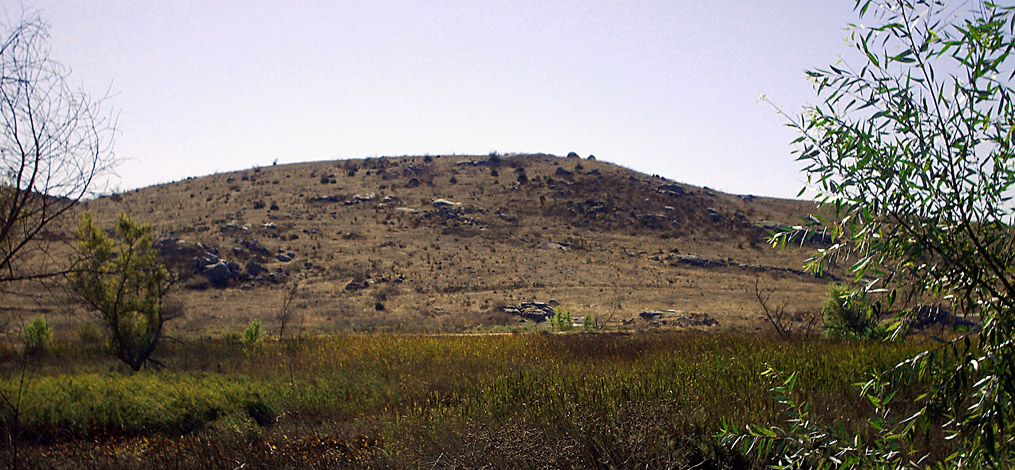
20 Mile House

“Mr. Gillespie and family occupy the 20 mile house, serving meals for the stage line. They are highly respected and quite an addition to the valley.”

So ran a short piece in the Poway Progress newspaper on May 16, 1896

It was called “20 Mile House” because it was at the halfway point on the stagecoach route between San Diego and Escondido. It stood along the old Poway Grade, the twisting and turning mountain road which was then the sole connection between the city of San Diego and the Poway Valley.

In the early 1900s the grade was rerouted further east. The area where 20 Mile House stood today fronts on Old Pomerado Road. But from at least the days of the Gillespies up through around 1910 or so it was the place where stagecoaches stopped to change horses and passengers and crew got a meal.

The building, which no longer exists, often gets confused with another structure built nearby in the late 1920s, the Big Stone Lodge.

Sources for this post included historic San Diego County newspapers, the archives of the Escondido History Center and the Poway Historical and Memorial Society, and the book Historic Stage Routes of San Diego County by Ellen L. Sweet and Lynne Newell.

Get Updates Automatically-Become A Follower of the San Diego History Seeker

You can get updates of San Diego History Seeker automatically in your email by clicking on the “Follow” button in the lower right corner of the blog page. You’ll then get an email asking you to confirm. Once you confirm you’ll be an active follower.

What’s in a name? It can get complicated.

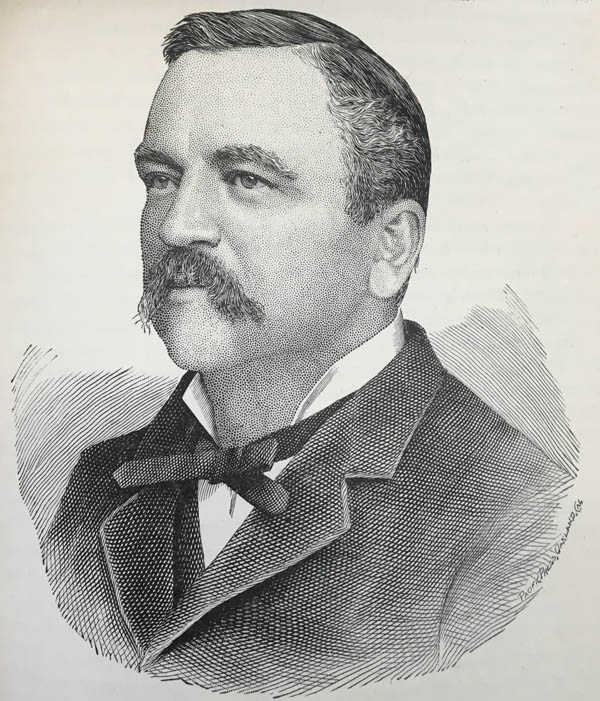
Take George A. Cowles, whose name today is marked by the highest mountain in the city of San Diego. That honor, however, would come decades after his death.

Born in 1836 in Connecticut, George Cowles was by the age of 33 a wealthy cotton broker and mill owner. But poor health led him to seek milder climates. He and his wife Jennie first visited San Diego County in the early 1870s, and they apparently liked it. In 1877 Cowles purchased 4,000 acres in the El Cajon Valley He was soon a successful grower of muscat grapes, olives, and other crops, as well as a cattle rancher. He got into banking and railroad development as well.

Not surprisingly, Cowlestown was the name of the post office and then a town that grew up around George’s ranch. But not for all that long. George Cowles died in 1887 at the age of 51. Three years later his widow Jennie remarried, taking as her new husband a realtor and surveyor named Milton Santee.

The rest as they say, is history. At least George’s name lives on in the mountain.

Sources for this post included the 1888 book, The City and County of San Diego Illustrated, and Containing Biographical Sketches of Prominent Men and Pioneers, by T. S. Van Dyke, San Diego County Place Names A To Z, by Leland Fetzer, and the website of the City of Santee.

Get Updates Automatically-Become A Follower of the San Diego History Seeker

You can get updates of San Diego History Seeker automatically in your email by clicking on the “Follow” button in the lower right corner of the blog page. You’ll then get an email asking you to confirm. Once you confirm you’ll be an active follower.

A post office named…Weed?

From 1880 to 1886 the list of official United States post offices in San Diego County included one called Weed. Readers needing proof can see it below in an excerpt from the register of U. S. Post Offices in the records of the U. S. National Archives:

Weed post office entry

Credit Appointments of U. S. Postmasters, National Archives and Records Administration

You’ll see that the name had nothing to do with vegetation, but rather the name of the postmaster, whose home also happened to be the location of the post office. In this case the postmaster was William Seaman Weed, who owned a 330-acre ranch in an area than known as Cordero in San Dieguito Township. It’s part of an area we call Sorrento Valley today.

Weed’s farm was located along the California Southern railroad tracks, “conveniently located” for his position of postmaster, according to an article in The San Diego Sun of August 18, 1883. The article also noted that “Mrs. Weed is celebrated as a good newspaper correspondent, many interesting letters from her facile pen having appeared occasionally in the columns of The Sun.”

As the register shows, Mrs. Georgia Weed in fact succeeded her husband in running the post office in April of 1883.

The register also indicates that the Weed post office went out of business in November of 1886, when service for the general area was transferred to a location a few miles north and east. It was a location in a newly developing resort town with a catchier name: Del Mar.

Sources for this post included the U. S. National Archives, historic San Diego newspapers, and the book, San Diego County Place Names A To Z by Leland Fetzer.

Get Updates Automatically-Become A Follower of the San Diego History Seeker

You can get updates of San Diego History Seeker automatically in your email by clicking on the “Follow” button in the lower right corner of the blog page. You’ll then get an email asking you to confirm. Once you confirm you’ll be an active follower.


Does this sound a little like a certain board game?

The following anecdote comes from the 1908 book History of San Diego 1542-1908: Volume II, by William E. Smythe.

It’s part of an interview conducted in late 1905 with Alonzo Horton, the man known as the father of the city of San Diego. Horton was then in his late 90s. He was recalling when he and others arrived in San Diego in the late 1860s and began buying up and developing property. This particular account seems to describe a live version of a Monopoly game:

“There was a man named John Allyn, who built the Allyn Block on Fifth Street. He came down here to see San Diego and I hired him to paper this old building that I had sold to Dunnells [that’s S. S. Dunnells, who built the first hotel in what was then called Horton’s Addition]. He was four days doing the work and I gave him for it the lot on the southeast corner of Fifth and D Streets, 50×100. He took it, but said he didn’t know whether he would ever get enough for it to make it worth while to record the deed. It was only a year or two later that he sold it for $2,000 to the people who now own it, and it is now [circa 1905] worth over $100,000.”

Get Updates Automatically-Become A Follower of the San Diego History Seeker

You can get updates of San Diego History Seeker automatically in your email by clicking on the “Follow” button in the lower right corner of the blog page. You’ll then get an email asking you to confirm. Once you confirm you’ll be an active follower.