A Farmhouse Endures

As we deal with sheltering in place and social distancing, I’d like to offer my readers a virtual visit to a piece of San Diego County history.

Just across the street from the Westfield North County Shopping Center in Escondido stands the Sikes Adobe Historic Farmstead. A part of the San Dieguito River Park, the farmstead includes a house which has been restored to its period of significance, the years from 1869 to 1899 when it was occupied by the Sikes family, pioneer settlers in northern San Diego County.

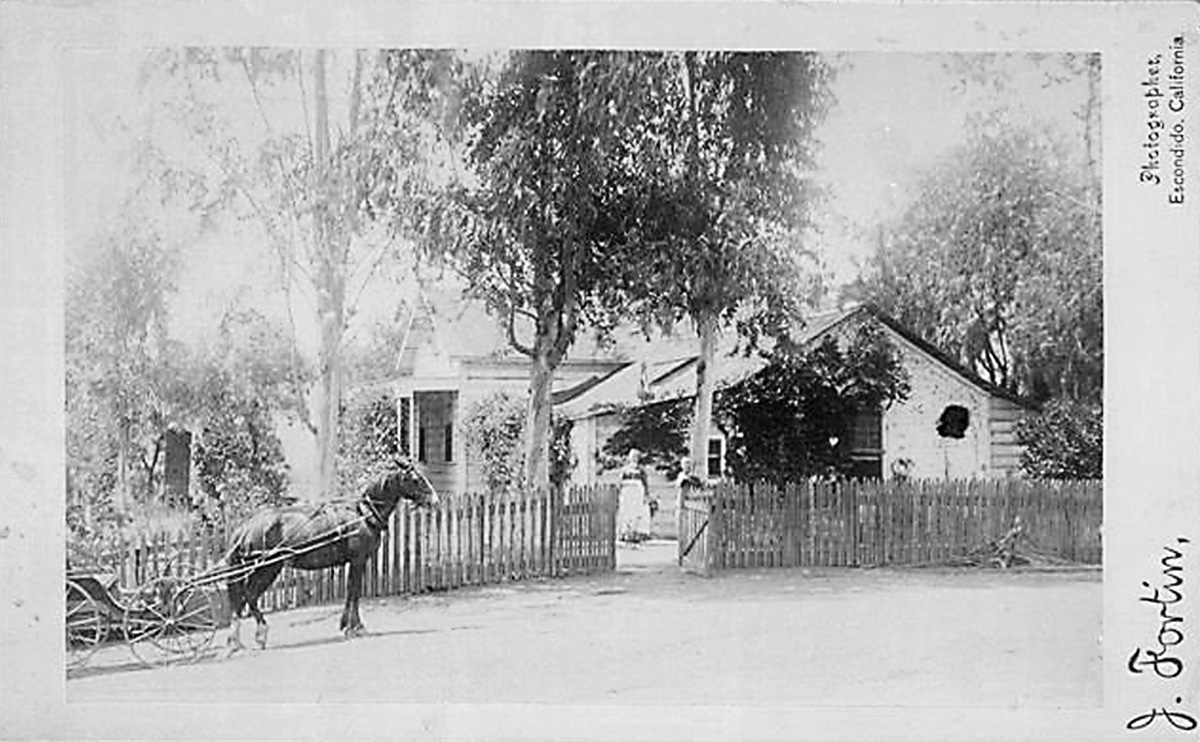
Here’s a photo of the farmhouse, circa mid-1880s and courtesy of the Poway Historical and Memorial Society:

It shows Eliza Sikes and one of her daughters standing near their open gate, perhaps preparing to go out in the family “car,” the horse-drawn wagon visible just outside the gate.

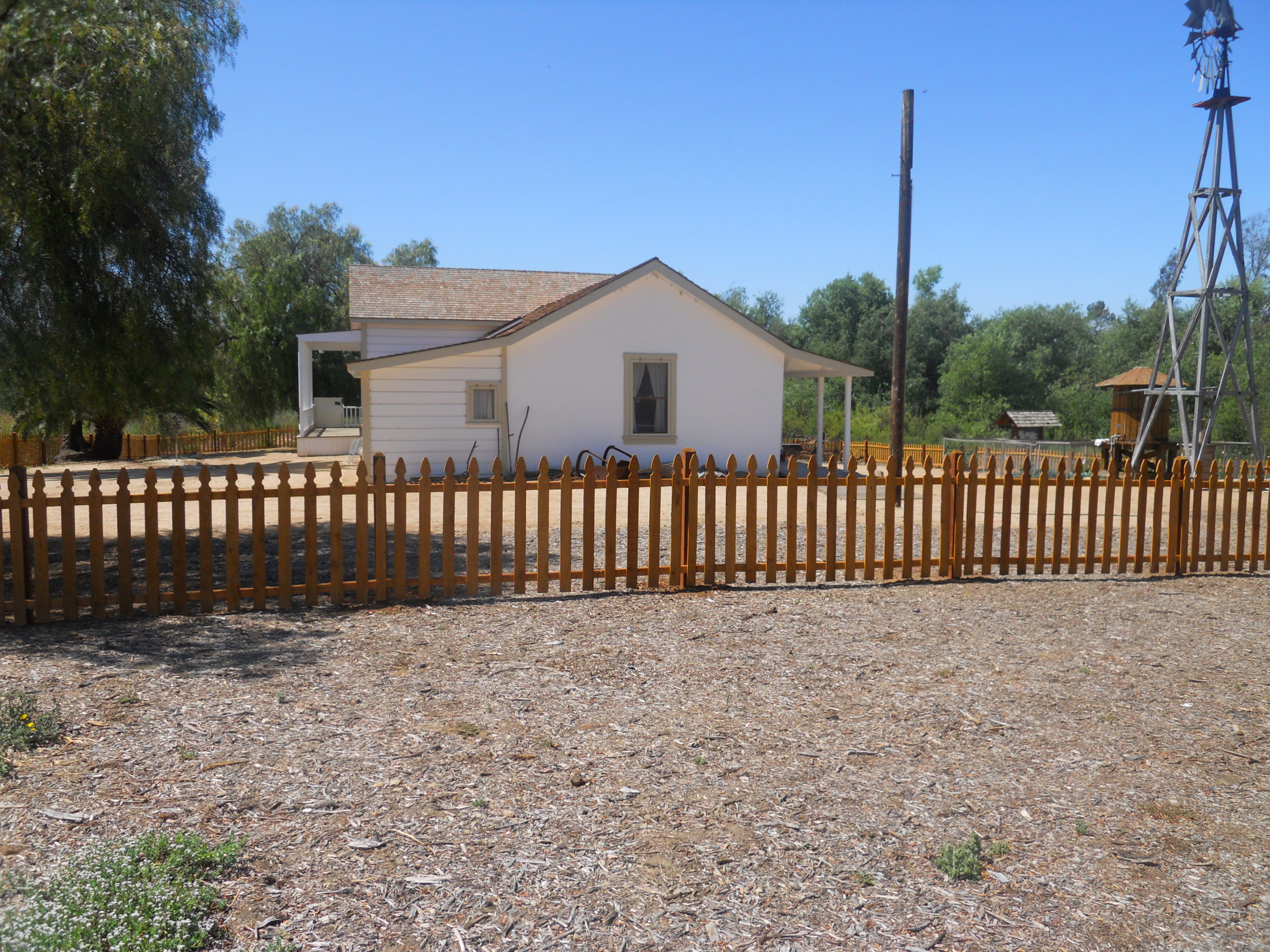
Now here’s a photo of the same house, from roughly the same angle, 126 years later, in 2011.It was snapped by yours truly while I was working as a docent at the farmstead:

This farmstead has survived a lot of history which the River Park was able to preserve and share with the public. Right now just these views are available as the farmstead is off limits due to the local and state pandemic restrictions. You can find out more about its history from my books, Valleys of Dreams, and: Once Upon A Town:Bernardo, Merton and Stow, which are available for sale on this site. You can also check on the San Dieguito River Park’s website , http://www.sdrp.org/wordpress /for updates on visiting the farmstead.

In the meantime, keep safe everyone!

March 1932: Another Challenging Time

Here’s a snapshot of San Diego County in the depths of the Great Depression.

“Build Highways for Board While Jobs Are Scarce” was the headline from a San Diego Union article on March, 5, 1933.

“Eight hundred men, ranging in age from 16 to 84 years, occupy five state labor camps in San Diego County,” the article began. The camps, run by the state division of forestry, were part of a network of 46 camps statewide and 22 in southern California, according to the article.

“In return for six hours work daily, except Sunday, the men are given lodging, subsistence and such clothing and tobacco as the camp management thinks necessary,” the article stated, adding that since the setup of the camps the workers “have constructed 15 miles of new highway and 25 miles of firebreaks. In addition they have maintained a nine-mile stretch of arterial highway.”

The national unemployment rate was at 25 percent at that time, and the widespread joblessness was reflected in the local camps.

“Artists rub elbows with laborers, teachers discuss the depression with expert accountants; cooks, bakers, stewards, railroad men, including several engineers, mechanics, undertaker and a dentist, are some of the many trades and professions represented in the camps.”

One thing the camp residents didn’t have access to, the Union noted, was writing materials and stamps. A few days earlier, on March 3, the paper announced a drive for writing materials and stamps for camp residents.

“Many young men at the camps cannot communicate with their relatives and friends unless this help is given. Mail or bring your donations to the business office of The Union with packages plainly marked, ‘State Labor Camps.’ “

You can get regular updates of San Diego History Seeker automatically in your email by clicking on the “Follow” button in the lower right corner of the blog page. You’ll then get an email asking you to confirm. Once you confirm you’ll be an active follower.
 

Fighting Plagues Old and New

We’re in a situation right now affecting the health as well as the economic and social well-being of all San Diego County residents as well as our fellow human beings across our region and across the world. So I felt the need to look for historical lessons about another plague.

Right now it’s worth remembering that humanity defeated smallpox in 1979. An Associated Press dispatch printed in The San Diego Union of October 19 1979 noted that “On October 26, officials of the Geneva-based World Health Organization which led the final assault on the virus, will travel to Nairobi to declare that smallpox has been eradicated.”

“Over the centuries,” the article noted, “smallpox killed, blinded or permanently scarred hundreds of millions.” But a worldwide campaign to educate and vaccinate people had reached the point where there had been no new cases reported since 1977. A Union article in December of 1979 stated: “Smallpox experts, saying no one has collected the $1,000 reward offered by the World Health Organization since 1979 for anyone reporting a verified case of the disease, recommended that the U. N. General Assembly drop the offer.”

The triumph of humanity over smallpox is one of the examples cited in a recent Time Magazine article by Yuval Noah Harari, a historian and philosopher. At the beginning of the article he makes an important point: “…while short-term quarantine is essential to stop epidemics, long-term isolationism will lead to economic collapse without offering any real protection against infectious diseases. Just the opposite The real antidote to epidemic is not segregation, but rather cooperation.”

Below is a link to the full article. I recommend it as important food for thought in this time of a new plague. Stay well everyone!

Link to Time article:

https://time.com/5803225/yuval-noah-harari-coronavirus-humanity-leadership/ .

A New Source for History Seekers

I spent last week at RootsTech2020 in Salt Lake City. RootsTech is an annual conference for genealogical researchers. Readers may recall that my historical research and writing work includes partnering with my wife in a family history research business, StorySeekers. Family history is history in microcosm; genealogy and the broader history of local communities, regions and nations are inevitably inter-related.

While attending a conference seminar, “Mexican Families of Early California,” I learned of a great new source for historical records, the Early California Population Project (ECPP). The “ECPP is a database compiled by the Huntington Library in San Marino, California. It consists of transcriptions from California mission registers from 1769 through 1850. These hand-written registers, as the library’s website explains, “are the books or folios in which mission priests recorded every baptism, marriage and burial conducted by that particular mission.”

These records offer vital info on Hispanic, Indigenous and Anglo-American people who interacted with the missions during that era, which is to say a big chunk of humanity. And I’m happy to say that the list of missions whose records can be found at ECPP includes the two historic San Diego County missions, San Diego de Alcala and San Luis Rey.

I’ve just begun to dig into this database. If you’d like to check it out, visit https://www.huntington.org/ecpp ,then click on “Access the Database.” When you get that far, I strongly advise you to then click on the “Help and More” tab to access their User Guide.

You can get regular updates of San Diego History Seeker automatically in your email by clicking on the “Follow” button in the lower right corner of the blog page. You’ll then get an email asking you to confirm. Once you confirm you’ll be an active follower.


Back Country Bounty

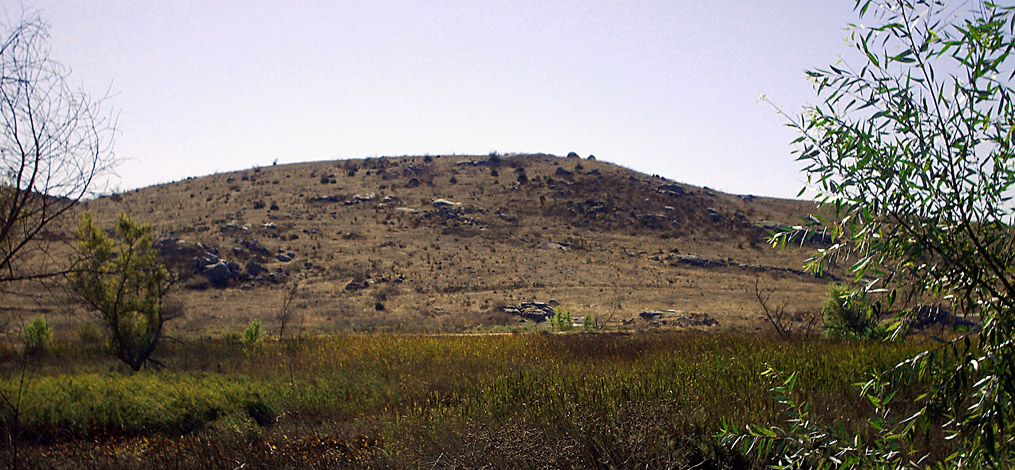
Periodically I like to remind readers of the days when San Diego County was a largely rural, sparsely populated area where the main occupations were farming and livestock raising. Here are two photos providing visual evidence of what much of the county looked like in 1887. They’re from the book, Picturesque San Diego, which was published in the fall of that year.The caption for the first one reads: “Escondido—Old Ranch House and Orange Orchard.”


Then here’s one labeled: “View in Poway Valley”

Things hadn’t changed that much a couple of decades after those photos were taken.

“Thousands of Acres are Sown to Grain” proclaimed the headline of an article on page 5 of the San Diego Evening Tribune on August 9, 1909. The article dealt with agricultural output in the “back country,” which in those days was the name applied to any part of San Diego County north of Old Town.

The article presented some statistics summarizing argricultural production over the previous year.

The report focused on “the country in the vicinity of Escondido and Ramona.” But it showed how clearly intertwined those towns were with adjacent communities by explaining that the “statistics on the Escondido portion of the county cover Escondido valley, Bernardo, Poway, San Pasqual and several smaller communities.” At that time, Escondido was the only incorporated city north of the city of San Diego. Bernardo, Poway and San Pasqual were unincorporated farming villages.

The article reported that “about 6,000 acres have been sown to barley” while “almost twice as many acres are in hay while the balance of the land is divided between wheat and oats.”

But a new set of crops was moving in on the grain fields, as indicated by reported shipment out of Escondido of “seventy-eight cars of lemons, forty seven cars of oranges and ten cars of honey.”

That was railroad cars they were talking about, and of those 135 railroad cars of produce rolling out of Escondido’s rail hub, “not more than five carloads” went to San Diego. The rest went to Los Angeles.

In addition to Picturesque San Diego, sources for this post included historic San Diego county newspapers and the book, History of San Diego 1542-1908, by William E. Smythe.

You can get regular updates of San Diego History Seeker automatically in your email by clicking on the “Follow” button in the lower right corner of the blog page. You’ll then get an email asking you to confirm. Once you confirm you’ll be an active follower.