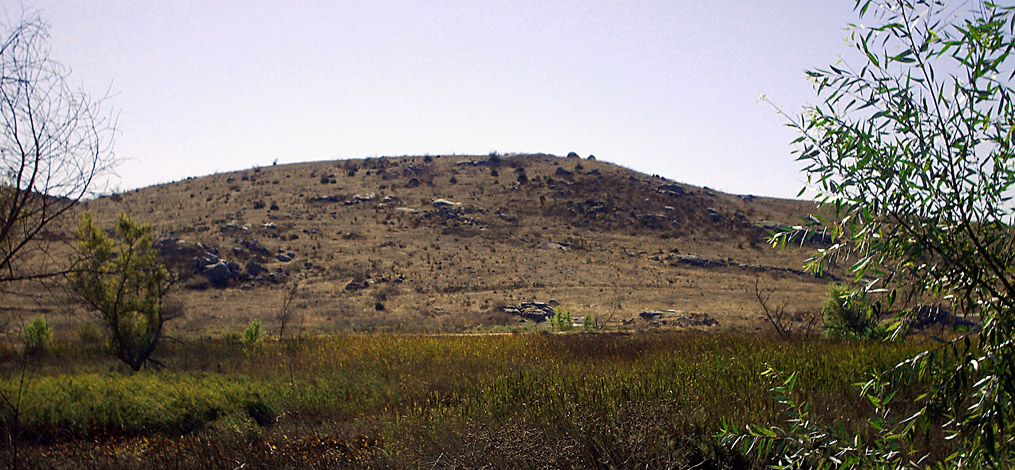
From Chicken Dorms to College Dorms


How many students and faculty members on the campus of Cal State San Marcos today realize that the previous occupants of their campus were millions of chickens, residing on one of the largest chicken ranches in the world?

From 1945 to 1985 the Prohoroff Poultry Farm covered 568 acres near Highway 78 and Twin Oaks Valley Road. Here’s an undated aerial photo of the farm from the archives of the San Marcos Historical Society:
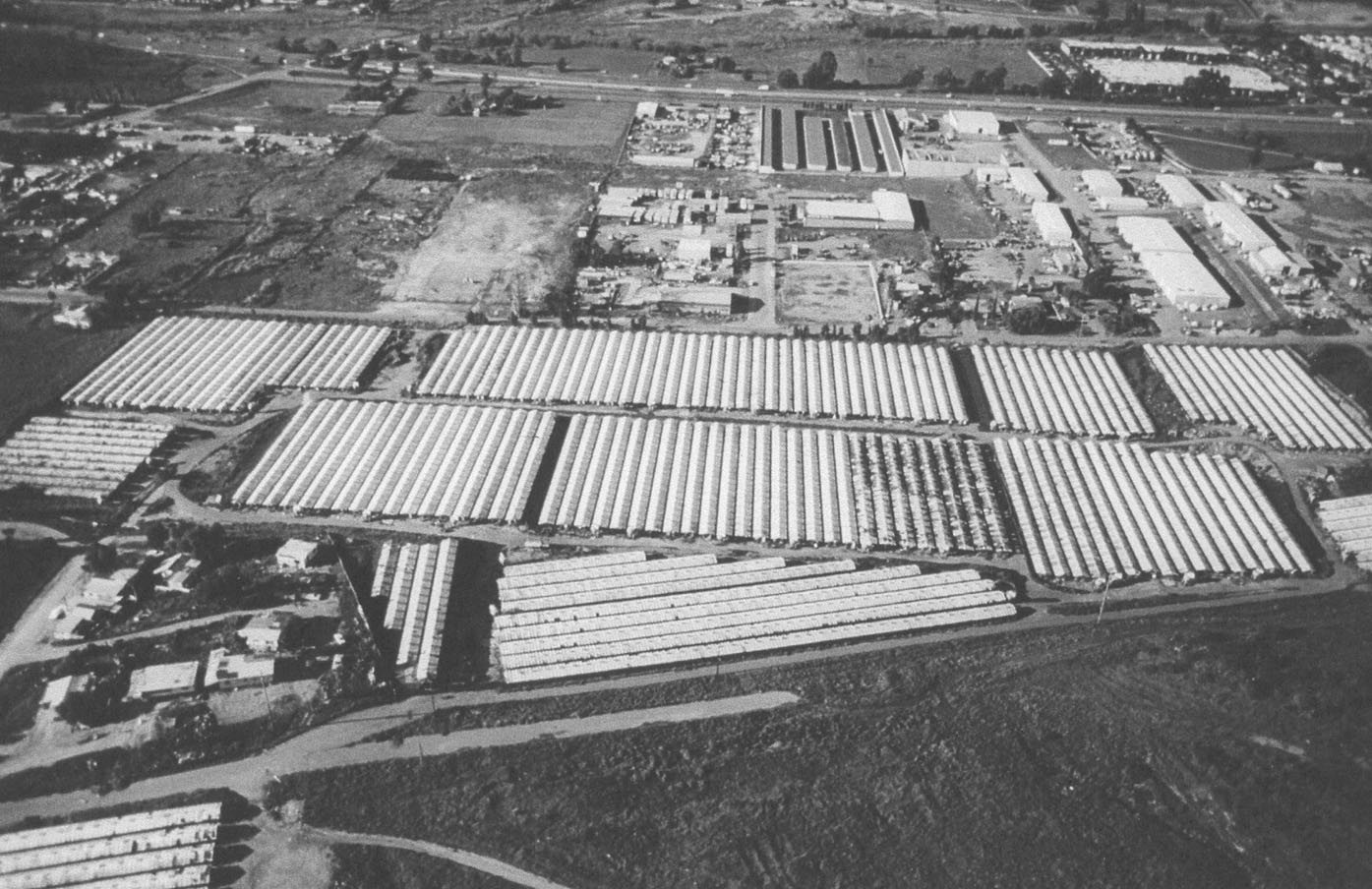
 poultry ranch

All those white-roofed buildings were chicken houses where the laying hens were kept, according to an interview I had with a granddaughter of Terenty Prohoroff, the Russian immigrant who founded the farm. Those houses made up the largest portion of the ranch, with a separate section for young chicks.

At its peak the farm housed some two million chickens and produced some 329 million eggs annually. Contemporary newspaper accounts described it as the biggest chicken ranch in the county and one of the largest in the world. Farmers and agricultural departments from as far away as Australia and Japan visited the place.

The ranch also had a plant for processing fertilizer, as you’d expect from an operation generating almost 11 million pounds of chicken manure each month. The flower-growing operations of the Ecke Family of Encinitas was one of the biggest customers for Prohoroff fertilizer.

In 1985 the Prohoroff family sold the land to developers who in turn sold part of the acreage to the state of California for the construction of today’s Cal State San Marcos campus.

Sources for this post included the San Marcos Historical Society archives and interviews with Prohoroff family members.

Get Updates Automatically-Become A Follower of the San Diego History Seeker

You can get weekly updates of San Diego History Seeker automatically in your email by clicking on the “Follow” button in the lower right corner of the blog page. You’ll then get an email asking you to confirm. Once you confirm you’ll be an active follower.
There once was a post office named Nellie….

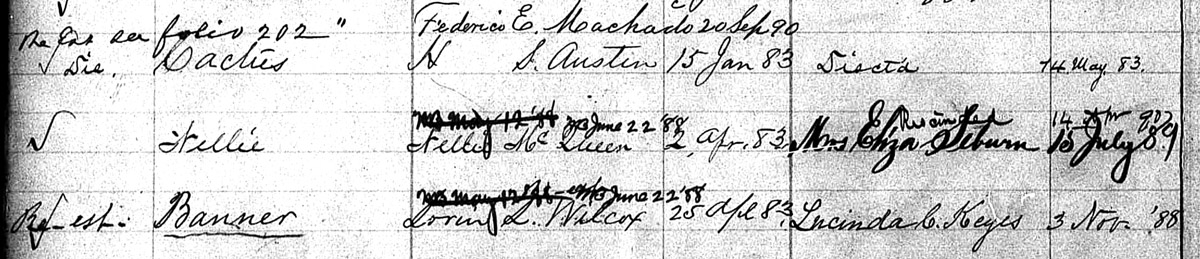
No, it’s not the start of a limerick. It’s a true fact that a post office named Nellie was recognized by the US Post Office Department, serving Palomar Mountain. If you don’t believe me, here’s an excerpt from the National Archives’ Record of Appointment of Postmasters indicating its designation in 1883, second line:

Nellie


Nellie McQueen, whose name appears on the register as the first postmaster, was a rancher on what was then called Smith Mountain. At that time the small community of ranchers on the mountain had to make a long ride down to Warner Springs to get their mail. “Whoever happened to be going, got the mail for everyone,” according to Marion Beckler’s 1958 book, Palomar Mountain: Past and Present. McQueen, an energetic and industrious person, applied on behalf of her community for a local post office and offered herself as postmaster.

It should be noted that she did not request the facility be named for herself when she applied. Energetic and industrious she may have been, but egotistical she was not. She suggested the name “Fern Glen.”

But for their own reasons the Post Office Department preferred single word names. They also said there was another post office with a name similar to “Fern Glen.” So to avoid any confusion they chose the name “Nellie.” McQueen protested that designation but was unsuccessful in getting it changed.

The mail contract was awarded on April 2, 1883. Thereafter, wrote Beckler, “Once a week, ‘Miss Nellie’ (as the old timers called her), saddled her horse, rode down the mountain, up through Mesa Grande to Ramona, returning next day with the mail.”

She did that job until moving off the mountain in 1887. The post office was moved to different locations but kept the name “Nellie” until 1920, when it was re-named “Palomar Mountain.”

In addition to the National Archives and the Beckler book, sources for this post included the 1937 book Palomar: From Tepee to Telescope, by Catherine M. Wood, and historic San Diego newspapers.

Get Updates Automatically-Become A Follower of the San Diego History Seeker

You can get weekly updates of San Diego History Seeker automatically in your email by clicking on the “Follow” button in the lower right corner of the blog page. You’ll then get an email asking you to confirm. Once you confirm you’ll be an active follower.

Mount Fairview

“The road to Mount Fairview continues for miles through Don Alvarado’s ranch and through a beautiful country watered by the San Luis Rey River and heavily timbered, but it is little settled and the echoes of its solitudes are only broken by the tinkle of a cow bell or the sharp crack of a vaquero’s whip. The approach to Mount Fairview is very pretty and as a farming country will have a great future. Farm houses although few and far between are met surrounded by orchards and vineyards, all giving proof that the industry of the community is well rewarded.”

That’s an excerpt from an article in the San Diego Sun of September 19, 1883 called, “Our County: A Trip Into the Country.”

Mount Fairview continued to develop as a farming community. A visit by a San Diego Union reporter to the San Luis Rey Valley six years later had as a tease under the headline: “A Beautiful Pen Picture of Rural Richness—One Part of San Diego’s Back Country—Fruit, Vegetables and Grain in Marvelous Profusion.”

The reporter described in detail the farms of a number of people who’d homesteaded in the valley over the previous decades, like R. A. Foss, W. H. Libby and John Shoop. Those names may not be familiar to most of you readers out there. For that matter, you may not recognize the name Mount Fairview, which is understandable because the little community ceased to be called by that name quite a while back. It came to be named for another one of those 19th century settlers the Union reporter visited in 1889.  I’ll let the reporter do the introduction:

“Beginning to look for quarters for the night, I was directed to ‘Fruit Vale farm and nursery,’ at the mouth of Gopher canyon. Reaching this beautiful place at a moment of vital importance, the hospitality of the owners, Mr. and Mrs. James Bonsall, was shown in a cordial invitation to spend the night at their house, where I can at this moment be found seated in the shade of an immense pepper tree.”

Sources for this post included historic San Diego newspapers and the 1984 book, The Little Old Bonsall Schoolhouse by Virginia Funk.

Get Updates Automatically-Become A Follower of the San Diego History Seeker

You can get weekly updates of San Diego History Seeker automatically in your email by clicking on the “Follow” button in the lower right corner of the blog page. You’ll then get an email asking you to confirm. Once you confirm you’ll be an active follower.

Rapid Transit, Circa 1872

“QUICK TIME—THROUGH BY STAGE FROM SAN FRANCISCO TO SAN DIEGO IN LESS THAN THREE DAYS,” was the headline on an item in the “Local Intelligence” column of the San Diego Union on September 26, 1872.

The local agent for the San Diego and Los Angeles stage line told the Union that, by authority of Mr. Seeley, who co-owned the stage line with Mr. Wright, “the time between this city and Los Angeles would be reduced to 23 hours” as of that date: “By the new arrangement the stages will leave San Diego for Los Angeles at 11 am, arriving at the latter city the following day at 10 am. Returning the stages will leave Los Angeles at 2 pm, and will arrive here at 1 pm the day after.”

I haven’t looked very deeply into how punctual the stage lines were, so I can’t say how closely they were able to keep to that 23-hour trip schedule. There’s a bit more obvious a contradiction in the paragraph that follows as far as characterizing the itinerary as being totally “by stage.”

Regarding the Los Angeles to San Fran leg of the trip, the article states that upon reaching LA, San Diego passengers would transfer to “the Telegraph stage line, which connects at Tipton–the present terminus of the S. P. R. R. [Southern Pacific Railroad]—with the cars [railroad cars, that is]. The latter line, together with the cars, carry the passenger through in 48 hours from Los Angeles to San Francisco.”

Maybe it was the paper’s reporter or editors who slipped up. But the article did accurately conclude that this route “”makes the traveling time between the cities of San Francisco and San Diego less than by steamer.” [The travel time by ship then was twelve days with stops.]

So it was faster, and with another advantage, according to the article: “Persons with a constitutional objection to seasickness will now look with more favor on the land route….”

Sources for this post included historic San Diego newspapers and the book, City of San Diego and San Diego County: The Birthplace of California, by Clarence Alan McGrew, published in 1922.

Get Updates Automatically-Become A Follower of the San Diego History Seeker

You can get weekly updates of San Diego History Seeker automatically in your email by clicking on the “Follow” button in the lower right corner of the blog page. You’ll then get an email asking you to confirm. Once you confirm you’ll be an active follower.

Flash! Request for Reader Comments!

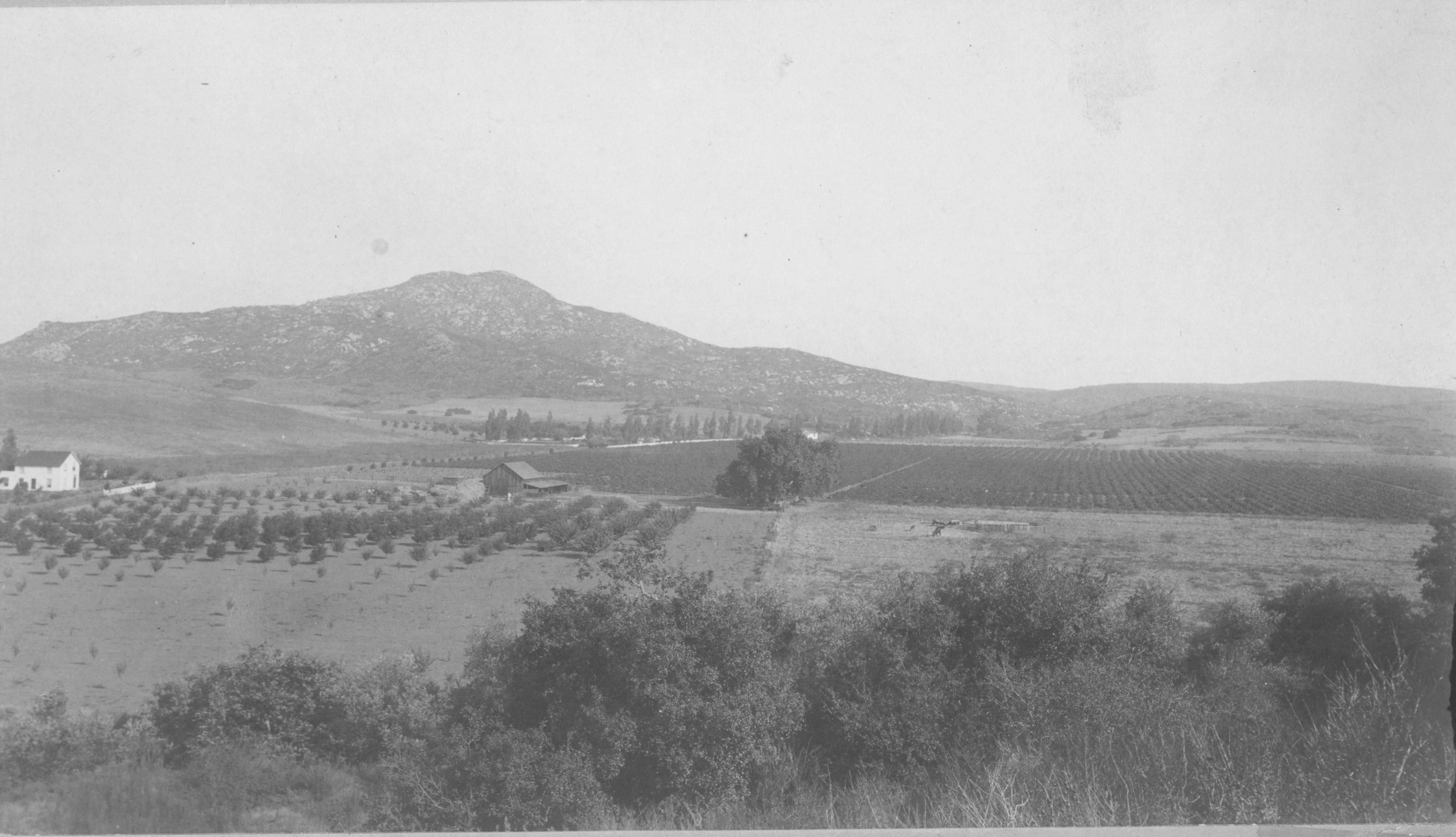
We interrupt our regularly scheduled programming for a request for more information from some of you readers out there, especially people from the Poway Historical and Memorial Society or anyone familiar with the history of Poway. The photo below, of the Horace Kent ranch, circa 1900, originally appeared in my blog post of January 12 of this year, “Going Over the Grade.” It’s brought a lot of interesting comments which I’m happy about. I’ve replied to all the previous ones but the latest, received this morning, asks about the possible owner of another house in the photo and just where the photo was taken from. I don’t have that info but if anyone out there might have the answers you can go to the original post and reply to the questioner. The original post was on January 12, 2015. Use the archive index on the home page, click on the month, and scroll down to the post and the “Comments” section. Thanks to all for the discussion!

#165 kent ranch,midland rd 1900