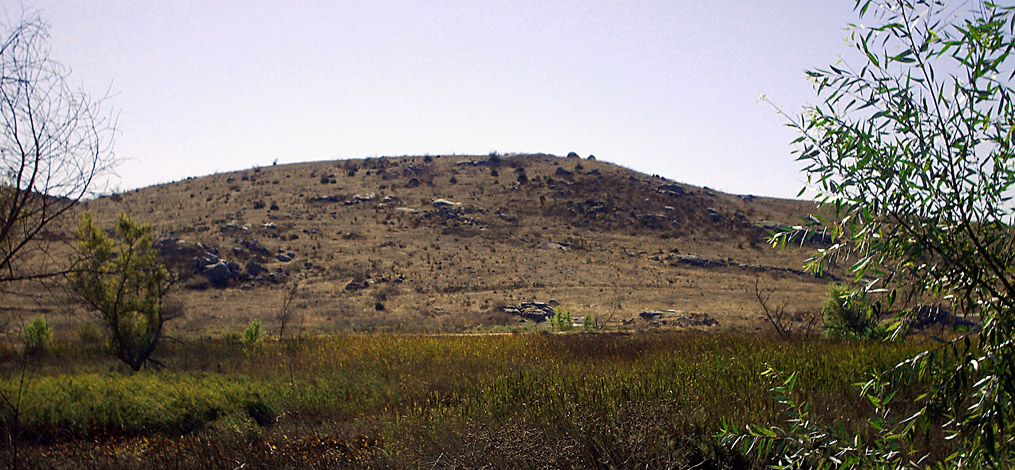
Doubletree-As In Wagons

I’m forever surprised to find how many contemporary words and phrases have historical origins. Sometimes they can be almost presciently coincidental(see my post back in April on the word “ramada.”) Sometimes they are the stuff of mythology (google “raining cats and dogs”).

Here’s another one, found in my perusal of historic San Diego newspapers.

A short item entitled “A Chapter of Mishaps” appeared in the San Diego Union on Tuesday, February 26, 1884.

“On Sunday last the Mussel Beds were visited by a large number of people from this city, several of whom were so unfortunate as to meet with accident to their buggies and teams.”

“Mussel Beds” is today Ocean Beach, but that’s a whole other name-origin story. For today’s purposes, it should be noted that the same problem caused two of the three accidents described by the article.

“Harry Schiller and Melville Klauber were the first to meet with a mishap,” stated the Union. “As they were driving along the beach with a couple of young ladies and a lively team, the double-tree of their carriage was broken, and they were left for a time hors du combat [French for out-of-the fight, or to put it in more practical terms, holding the reins with no horses at the other end]. This break was repaired, however, without much trouble.”

Two more riders had a little more of the same trouble. While returning to the city from the beach, “Lucien Blochman and Nathan Meyer attempted to jump their team across a ditch which had been washed out in the road a short distance this side of Old Town.”

While the horse team made the jump, reported the Union, “the double-tree of the carriage snapped, freeing the animals from the vehicle…” The horses trotted away, apparently leaving Blochman and Meyer “and their lady companions” behind. The stranded riders were “taken in the carriages of some friends, and arrived in town all right.”

What the Union’s reporter didn’t bother to explain, because back then he didn’t have to, was that a double-tree was essentially a crossbar on a wagon or carriage to which another crossbar was attached to allow the harnessing of two animals abreast.

What connection this has to the name of the contemporary hotel chain appears to be purely coincidental. All I can say for sure is that the hotel chain offers nice complimentary cookies.

Sources for this post included historic San Diego Count newspapers, Webster’s Dictionary and the book San Diego Place Names A to Z by Leland Fetzer.

Get Updates Automatically-Become A Follower of the San Diego History Seeker

You can get weekly updates of San Diego History Seeker automatically in your email by clicking on the “Follow” button in the lower right corner of the blog page. You’ll then get an email asking you to confirm. Once you confirm you’ll be an active follower
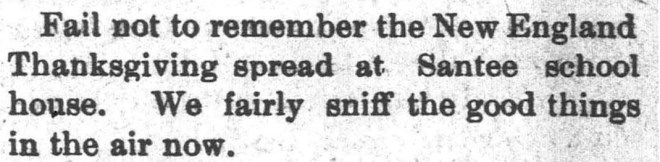
San Diego in 1850: One “Good and Suitable” Policeman

It was in February of 1850, two years after the end of the Mexican-American War transformed California from a province of Mexico to a territory of the United States, that the territorial legislature began creating the framework for city and county governments.

The first election for a San Diego county government under the U. S. flag took place on April 1, 1850. A total of 157 people voted, according to historic records cited by William Smythe in his 1908 book, History of San Diego: 1542-1908.

If that vote total sounds miniscule, keep in mind that the total non-Indian county population in 1850, according to census figures from the San Diego History Center, was only 798. And of that 798, 650 of them lived in within the confines of the city of San Diego. (The absence of some 10,000 Native American people in the county at the time from the census records is a whole sorry history lesson in itself.)

Elections for a San Diego city government were held on June 16, 1850. Voters elected a mayor, five city council members, a treasurer, an assessor, a city attorney and a marshall. The council had its first meeting the next day, June 17.

I recently learned that the San Diego City Clerk’s office has digitized many of the city’s historical records in its archives, including copies of some of the very first ordinances passed by that new city government. The archive’s website is at http://www.sandiego.gov/digitalarchives/index.shtml .

Not surprisingly, one of the first ordinances passed by the council created “the office of City Interpreter and Translator” to serve “in all cases, where his services may be required on behalf of individuals, or of this council, or of any of the Courts of the City or County.”

Another early ordinance declared that “the ordinances of the late Ayuntamiento [the name of the town council under Mexican rule]…relative to licenses, nuisances and the general government of the said town, shall be and remain in binding force, until other laws are substituted therefor.”

These ordinances were all passed in June and early July, as was another entitled: “An Ordinance relative to creating a Temporary Jail and providing suitable fixtures.” In addition to authorizing the City Marshall to “rent a good and secure room” and other equipment necessary “to keep securely all offenders against the laws,” it also called for the marshall “to employ a good and suitable person as Policeman, whose duty it shall be to report to the Mayor, once a day, or oftener if required.”

Get Updates Automatically-Become A Follower of the San Diego History Seeker

You can get weekly updates of San Diego History Seeker automatically in your email by clicking on the “Follow” button in the lower right corner of the blog page. You’ll then get an email asking you to confirm. Once you confirm you’ll be an active follower

One Landmark Gives Way To Another

“Escondido Picks Old Hotel Site for New Hospital” proclaimed the headline of an article in the June 24, 1945 edition of the San Diego Union.

“Selection of the site of the old Escondido hotel, a well known landmark 25 years ago, as the location of Escondido’s Palomar Memorial Hospital was announced by the hospital committee which is raising funds for the enterprise,” began the article. “The site, on Grand Avenue, is just east of the local civic center.”

The Escondido Hotel, one of the first buildings erected in the then-new town of Escondido, stood on Grand Avenue from 1886 until its demolition in 1925. When the newly-formed Escondido Valley Hospital Association selected the Grand Avenue site for their new complex, they also announced a combination community celebration and fundraiser to be held on the upcoming Fourth of July in Grape Day Park.

Escondido’s annual Grape Day celebration in the park had been on hiatus since Pearl Harbor, and the community may have been glad to get together again in the summer of 1945, with the war in Europe over and peace seeming to be on the horizon in the Pacific. An estimated 4,000 to 5,000 people showed up for the event, putting the hospital building fund “well over its goal,” according to the Union of July 5, 1945. Keep in mind that Escondido’s population at that time stood at around 4,500 total.

It sounded from the press coverage like a good old-fashioned community party, with a barbecue, parade, horsemanship exhibitions and other entertainment including dances, singers and “several San Diego radio stars and war plant entertainers,” including “Therman Landreth, world champion top spinner.”

That single hospital on Grand Avenue would evolve into today’s Palomar Pomerado Health District.

Sources for this post included historic Escondido and San Diego newspapers and the history section of the Palomar Pomerado Health website, http://www.palomarhealth.org/about-us/about-us-our-story .

Get Updates Automatically-Become A Follower of the San Diego History Seeker

You can get weekly updates of San Diego History Seeker automatically in your email by clicking on the “Follow” button in the lower right corner of the blog page. You’ll then get an email asking you to confirm. Once you confirm you’ll be an active follower

Hage the Dairyman

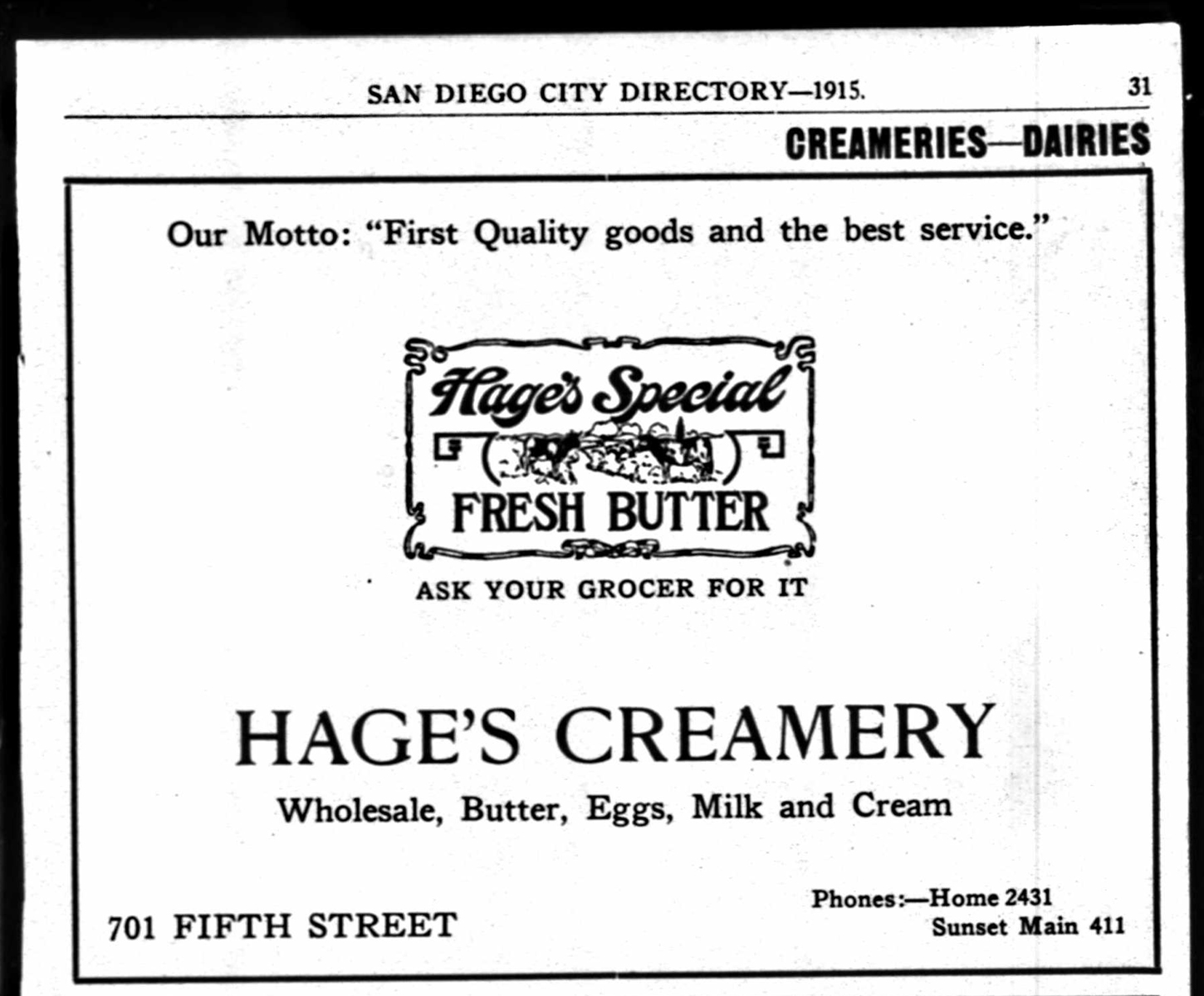
Hage creamery

The ad shown above is from the 1915 San Diego City Directory.

Willard B. Hage was born into a dairying family in Wisconsin in 1868. He brought his dairying skills with him when he came to San Diego in 1891.

Starting out delivering milk with his own wagon and a single horse, he did well enough that by the early 1900s he owned creameries in the cities of San Diego, Escondido and Poway.

An article in the January 1, 1916 San Diego Union noted how Hage “became impressed with the possibilities in San Diego’s back country. Backing up his belief, he adopted a novel and liberal policy of supplying modern dairying equipment to back country ranchers and allowing them to pay for it on easy terms.” This, the article stated, “made it possible to develop the dairy industry out in the county in a section that was formerly given over to the raising of grain.”

Interestingly, in both the 1900 and 1910 United States Censuses, Willard Hage lists his occupation as “Dairyman,” while in 1920 he describes himself as “President, ice cream company.”

Willard Hage died in 1925. His business would continue under the family name and ownership and be a San Diego institution until its merger with Foremost Dairies of San Francisco in 1954.

Sources for this post included the 1915 San Diego City Directory, historic San Diego County newspapers, the Los Angeles Times, the United States Census Bureau, and the 1922 book, City of San Diego and San Diego County: The Birthplace of California, by Clarence McGrew.

Get Updates Automatically-Become A Follower of the San Diego History Seeker

You can get weekly updates of San Diego History Seeker automatically in your email by clicking on the “Follow” button in the lower right corner of the blog page. You’ll then get an email asking you to confirm. Once you confirm you’ll be an active follower.