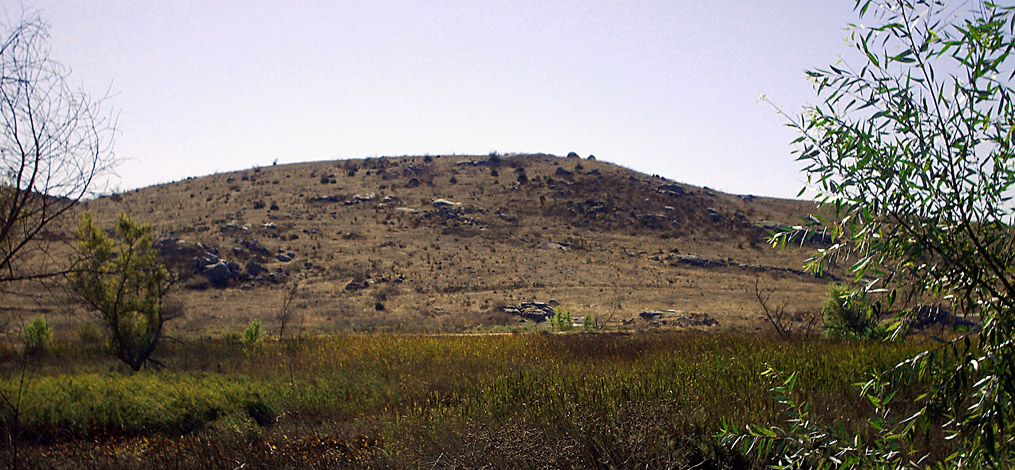
Happy Labor Day!

“The labor of the world is the foundation of the world. If you don’t stand for your rights today your rights tomorrow will be fewer still. The human stomach cannot fight a bank vault. The stomach will get empty, but the bank vault holds its own. Keep on pulling and working together and labor will be rewarded. Place men in your legislative halls who have the nerve and the brain to stand up for the rights of labor. Then money will not mould nine-tenths of the legislation of this country as it does now. I want you to feel that my soul is with you if my mouth does not do you much good.”

Excerpt from a talk given by J. L. Dryden to an open meeting of the San Diego Carpenters Union No. 182 on May 2, 1890 at a hall downtown. Reported in the San Diego Union, May 3, 1890.

Dryden was a lawyer active in civic affairs in San Diego County in the late nineteenth and early twentieth centuries. Among other things, he was one of the original trustees for the San Diego Normal School, which would eventually become San Diego State University. Dryden was also a candidate for the state senate and assembly for the county Populist party during the 1890s.

Sources for this post included historic San Diego and Poway newspapers and the book, City of San Diego and San Diego County: The Birthplace of California, by Clarence Alan McGrew, published in 1922.

Get Updates Automatically-Become A Follower of the San Diego History Seeker

You can get weekly updates of San Diego History Seeker automatically in your email by clicking on the “Follow” button in the lower right corner of the blog page. You’ll then get an email asking you to confirm. Once you confirm you’ll be an active follower.

Bernardo-98 Years Ago This Month

Above is a photo of the Bernardo General Store, courtesy of the Escondido History Center. The photo is undated. But a close examination of the photo reveals an ad for “Owl Cigars” just below the floor boards near the entrance. That ad dates it as sometime after 1887, that being the year those cigars (ancestor of “White Owl Cigars”) first went on sale.  The photo also wouldn’t have been taken any later than around September 1919, for reasons explained below.

The store served the town of Bernardo, a farming village located about a mile south of today’s Westfield North County mall. A short article appeared 98 years ago this month, on August 27, 1919, in Escondido’s Daily Times Advocate newspaper, noting that the general store “is located for the present at two places. Half of it at the old stand and half at the new which is over at the south end of the new bridge. The new building is going up rapidly and will be ready for use when the new bridge is thrown open on Grape Day.”

The “new bridge” referred to a concrete bridge being erected to cross the San Dieguito River a quarter of a mile downstream from the heart of the town of Bernardo. That bridge, dedicated as part of Escondido’s Grape Day festivities on September 4, 1919, would have a fateful effect on the town of Bernardo, which I sometimes describe as “the lost ancestor of Rancho Bernardo.”

You can find out more on this story in my book, The Lost Town of Bernardo, available for sale on this website.

Get Updates Automatically-Become A Follower of the San Diego History Seeker

You can get updates of San Diego History Seeker automatically in your email by clicking on the “Follow” button in the lower right corner of the blog page. You’ll then get an email asking you to confirm. Once you confirm you’ll be an active follower.

A Life on the Land-His Own and That of Others

Gregorio Omish is not on most lists of movers and shakers in San Diego County history. He was born in 1879 on the Rincon Reservation and grew up there, an Indian of Luiseño roots.

In the 1900 United States Census, he was living and working as a farm laborer on the ranch of Gustavus Merriam in what is today the Twin Oaks Valley section of San Marco. Gustavus Merriam is known to readers of this blog and others as the first European settler of that area and the man who gave Twin Oaks Valley its name. The nearby Merriam Mountains are also named in this honor.

Merriam prospered as a grower of grapes for wine and brandy and as a beekeeper. But part of the source of his prosperity was his farmhands. In addition to his wife and son, those farmhands also included two Native Americans, one of whom was Gregorio Omish.

In later censuses one can find Gregorio working on his family’s farm on the Rincon Reservation. But he moved around in his work, and in that respect was an example of the pattern followed by many Native Americans in those years.

“In the fifty years between 1850 and 1900 Indian people practiced agriculture when it was feasible but often found the economic rewards minimal,” according to a 1996 essay on Indian labor in San Diego County by archaeologists Richard Carrico and Florence Shipek.  “This is not to say that they did not attempt farming or stock raising but rather that wages paid for labor on other’s farms and ranches often exceeded the economic return of working reservation land.”

Carrico and Shipek cited Omish as an example of that trend, citing sources like the census, newspapers of the day, accounts of other settlers, and personal journals Omish kept. They noted, for example, that “from 1893 to 1910 [Omish] raised wheat and barley for sale, raised and sold livestock, picked grapes, cut and sold wood, hunted and sold quails, and worked as a laborer.”

“Ever the opportunist,” Carrico and Shipek wrote, like most Luiseños, Omish worked at these various tasks as the season or market dictated.”

Gregorio Omish managed to live out his life working the land, dying at the age of 70 in 1949. His obituary in The San Diego Union of May 21, datelined Rincon, was short, but included a sentence more fitting than the reporter may have realized: “He was a farmer and had resided here all his life.”

Sources for this post included historic San Diego County newspapers and the essay, “Indian Labor in San Diego County, 1850-1900,” published on the website, www.kumeyaay.com .

Get Updates Automatically-Become A Follower of the San Diego History Seeker

You can get updates of San Diego History Seeker automatically in your email by clicking on the “Follow” button in the lower right corner of the blog page. You’ll then get an email asking you to confirm. Once you confirm you’ll be an active follower.

“Normal School”

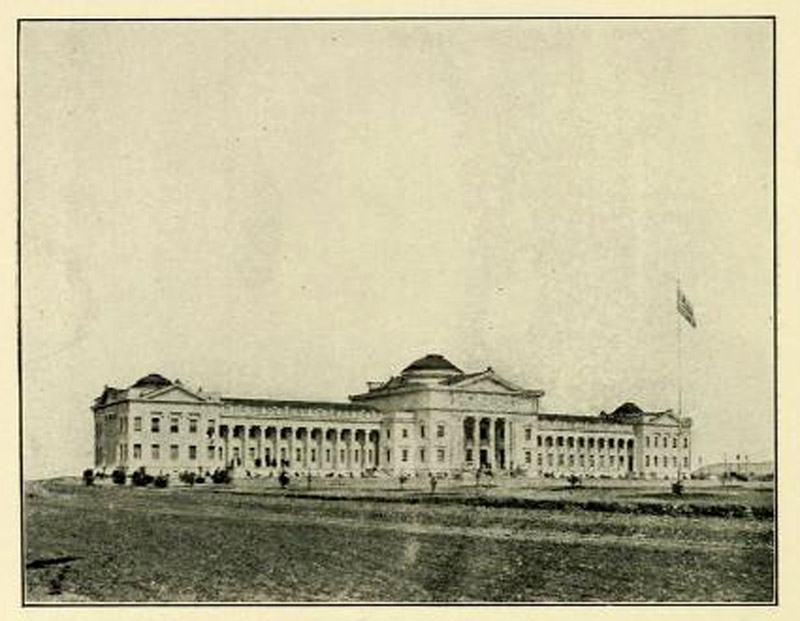
A hundred years ago, teachers colleges were called “normal schools.” You had to get approval from the state and as of the early 1890s, San Diego County did not yet have such a school.

“The movement to secure a State Normal School for San Diego was undertaken in 1894,” according to William E. Smythe’s A History of San Diego: 1542-1908. That movement was “due primarily to the great expense and inconvenience experienced by San Diego families in sending their children to the State Normal School at Los Angeles and other institutions throughout Southern California. This expense was estimated at $2,750 per month, and it was obvious that such conditions could not continue indefinitely.”

The first San Diego Normal School opened in May 1899 in a stately building in University Heights. Below is a photo from Smythe’s  book:


Growing enrollment would eventually result in movement to a new campus in Mission Valley in 1931, along with a new name, San Diego State Teachers College. We know it today as San Diego State University.

Get Updates Automatically-Become A Follower of the San Diego History Seeker

You can get updates of San Diego History Seeker automatically in your email by clicking on the “Follow” button in the lower right corner of the blog page. You’ll then get an email asking you to confirm. Once you confirm you’ll be an active follower.


What’s in a name? A lot of history.

That’s a favorite theme for me, as I’ve found there’s a lot of history in San Diego County place and street names. Here’s an example.

Bougher Road and Helen Bougher Memorial Park salute two members of a family that resided in San Marcos from 1917 to 1984.

In a 1983 article in the San Marcos Outlook newspaper, longtime resident Louse Fulton Hard wrote that in the days when San Marcos was a small farming community, “Roads were known by their description or the name of the people who lived on them.” It was the latter case with Bougher Road, which today connects Mission and Rock Springs Roads.

Bougher Road was named in honor of William Bougher, who came to San Diego County in the 1880s from Ohio, according to documents in the archives of the San Marcos Historical Society.

Among those documents are a biographical data questionnaire filled out by William’s son Alvin in 1981 for the historical society and the transcript of an oral history interview Alvin gave the same year. Among other things, Alvin Bougher noted that before his birth in 1909, his family had lived for a time on Palomar Mountain, where they were neighbors and friends with Palomar Mountain pioneer Nate Harrison. Boucher Hill and Boucher Lookout Road on that mountain are in fact named for William Bougher. According to Leland Fetzer’s 2005 book, San Diego County Place Names A to Z, the different spelling “probably reflects the pronounciation of the family name,  [as in “bu-ker] adding that “mapmakers seem to have obtained their place name information from interviews, not from printed sources.”

Alvin Bougher continued farming on Bougher Road until 1984 when, in his mid-70s, he moved to Oregon to be closer to his sons.

Helen Bougher Memorial Park is named after Alvin’s wife Helen, who died in 1980.

You can find out more about the Boughers and their place in San Marcos history in my book, Valleys of Dreams, for sale on this blogsite.

Get Updates Automatically-Become A Follower of the San Diego History Seeker

You can get updates of San Diego History Seeker automatically in your email by clicking on the “Follow” button in the lower right corner of the blog page. You’ll then get an email asking you to confirm. Once you confirm you’ll be an active follower.