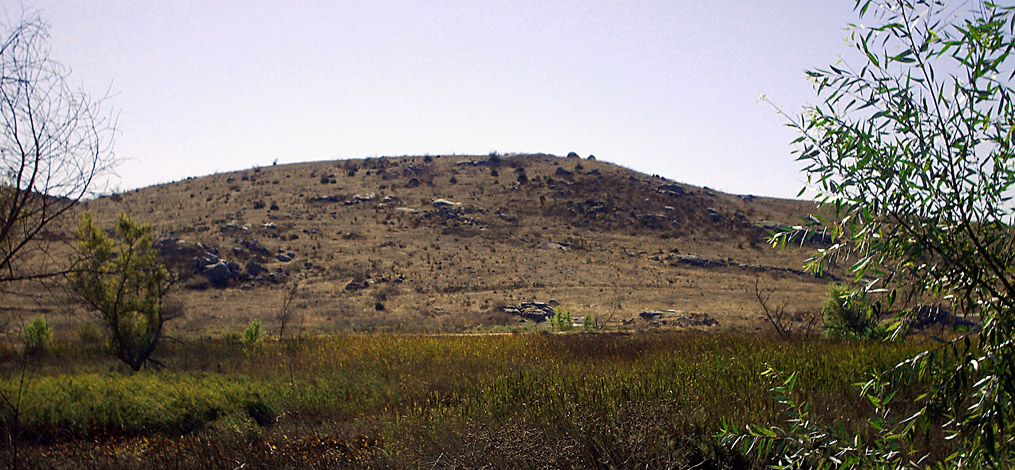
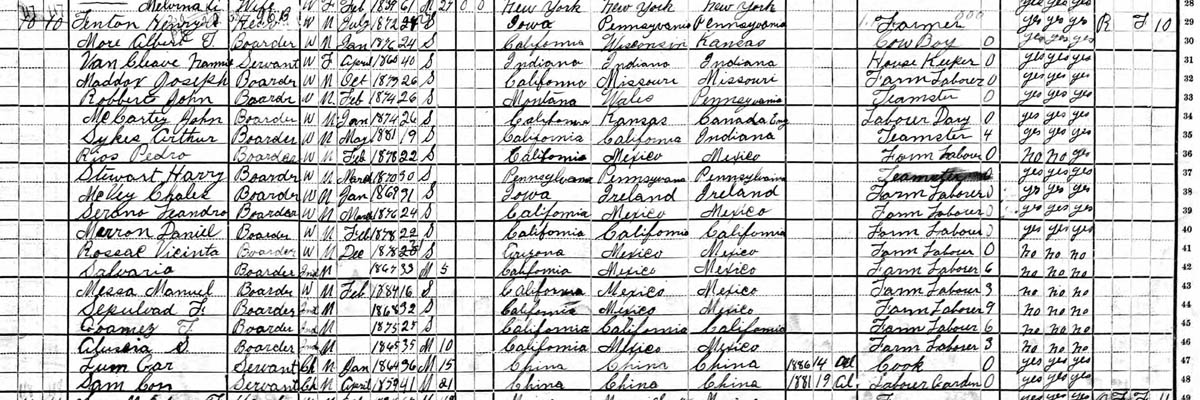
Of Eagles, Omens and Real Estate

The Sunday edition of the San Diego Union for October 8, 1871 included among the items in its “National City” column, a story that began this way:

“On Wednesday afternoon, people in the immediate vicinity of the flag staff in front of Kimball Brothers’ land office were surprised by the appearance of a huge eagle which lighted on top of the staff.”

A little background here. The Kimball brothers—Frank, Levi and Warren—had in 1868 purchased the Mexican-era land grant Rancho de la Nacion, some 26,000 acres spreading south of Old Town San Diego and fronting the bay. They subdivided it and began offering lots for sale in the community they renamed “National City.”

Along with seeking land buyers, they also quickly began trying to interest railroad companies in extending a line to their town and connecting it to the developing transcontinental route. They offered thousands of acres to various railroad entrepreneurs in exchange for the building of a station and other facilities.

At the time of the article in question, no deal had been officially announced, but the idea of a transcontinental terminal in the San Diego area was very much in the news. So there’s the context for this tale of the eagle’s landing on a real estate office flagpole.

The eagle hung around for a while, long enough, stated the Union reporter, that “the believers in signs and wonders predicted that the appearance of this strange visitor was the herald of good times coming, and would now allow the bold bird to be brought down…”

The article went on to state, “The [railroad] terminus being the most important matter under consideration, it was supposed that this prophetic bird had come among us for the purpose of pointing out the coveted spot. This belief was confirmed by its taking wing and going in a straight line to the railroad lands, which it sailed around a few minutes, but returned to the flag pole again, as if dissatisfied with the reconnaissance, where it remained all night.”

At daylight the next morning, the eagle had disappeared, “leaving the superstitious and the skeptical to discuss the object of the eagle’s visit.”

A decade and a half later National City would get a station as the terminus of the transcontinental railroad, along with repair yards. But a few years after that the railroad owners changed their plans and moved the facility to the Los Angeles area.

Maybe that bird was right.

Sources for this post included historic San Diego newspapers and the books San Diego County Place Names A To Z by Leland Fetzer and City of San Diego and San Diego County:Birthplace of California, by Clarence Alan McGrew.

Get Updates Automatically-Become A Follower of the San Diego History Seeker

You can get weekly updates of San Diego History Seeker automatically in your email by clicking on the “Follow” button in the lower right corner of the blog page. You’ll then get an email asking you to confirm. Once you confirm you’ll be an active follower.
Landmark Pioneers

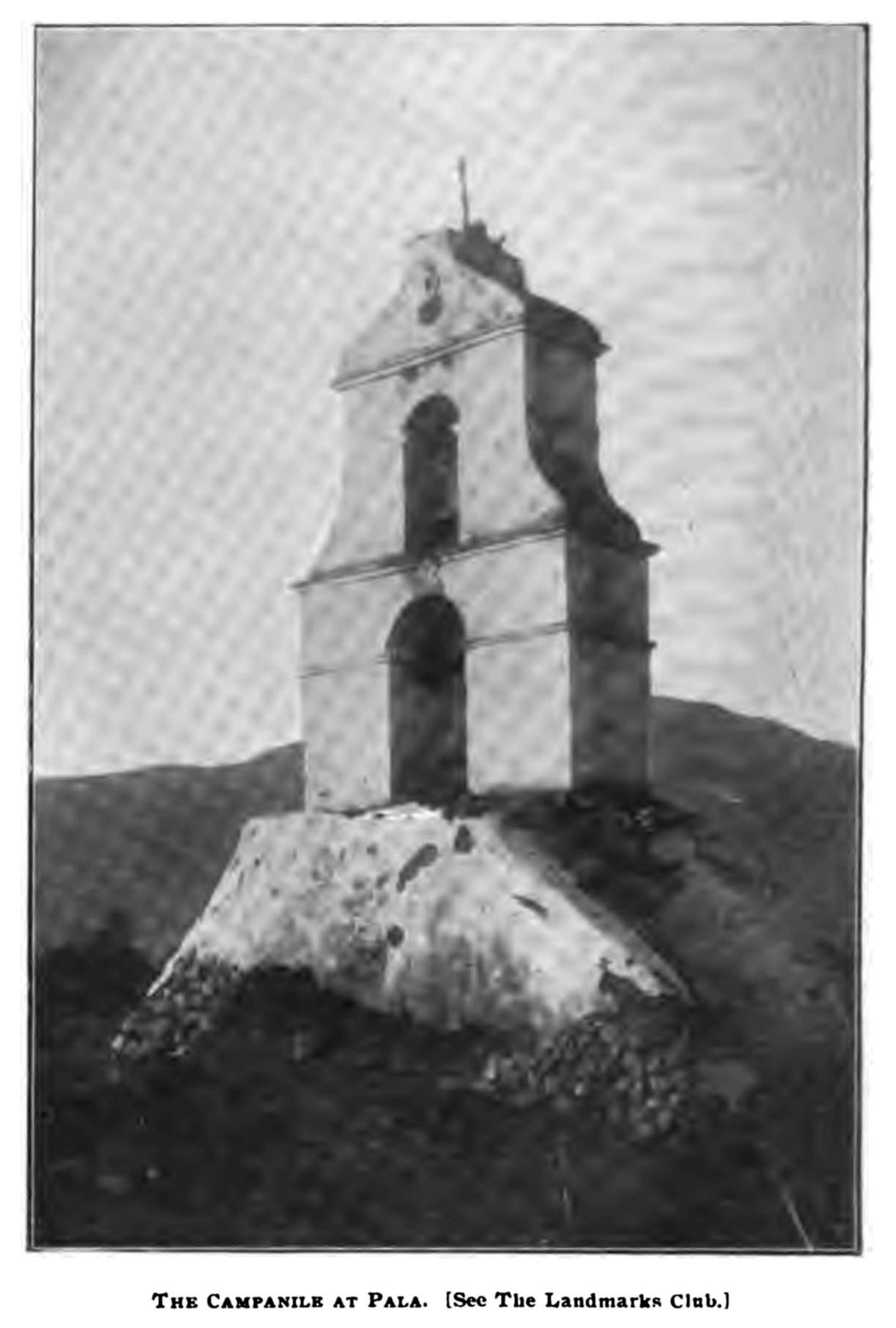
Pala Campanile 1901 452

Photo from magazine Land of Sunshine, December 1901.

I did a post a while back about the magazine Land of Sunshine, a monthly published from the mid-1890s through the early 1920s. It offers some excellent articles and great photography on the people, places and culture of southern California at the time, especially during the editorship of Charles Fletcher Lummis, from 1893 to 1909.

Lummis was a prolific researcher, writer and photographer of the southwestern United States. He was also an activist. Among issues he spoke and wrote about were the rights of Native Americans and the need for historic preservation.

In 1895 he was among the founders of the Landmarks Club, its proclaimed purpose “to conserve the missions and other historic landmarks of southern California.” Such volunteer efforts marked the beginning of the historic preservation movement in California.

A story in the magazine’s December 1901 issue describes a visit by Lummis and other club members the previous month to Pala “to arrange for the immediate repair of the Old Mission Chapel.”

The project, Lummis wrote, had been initiated by a grant from Phoebe Hearst, at that time a well-known philanthropist and advocate of women’s rights as well as the mother of William Randolph Hearst.

But Lummis added that the project was “now as generously facilitated by the patriotism of the people of Pala.”

“The old chapel was found in much better condition for salvage than had been feared,” wrote Lummis. “The earthquake of two years ago—which was particularly severe at this point—ruined the roof and cracked the characteristic belfry, which stands apart. But thanks to repairs to the roof made five or six years ago by the unassisted people, the adobe walls of the chapel are in excellent preservation.”

Still, a lot of work needed to be done to restore the building to its original condition, and Lummis spoke glowingly of the support extended by the local residents.

“In the evening, after the committee had made its measures and specifications for the necessary repairs, there was a little gathering [at the nearby general store].”

About 15 heads of families attended, Lummis stated, reflecting the local population of Native Americans and descendants of Mexican families from the mission days, and the newer Anglo arrivals since 1848.

“After a brief statement of the situation, the Paleños were asked if they would help. ‘I will give 10 days work,’ said John A. Giddens, the first to respond. ‘Another ten,’ said Luis Carillo. And so it went. There was not a man present who did not promise assistance.”

“The entire trip was heart-warming;” wrote Lummis, “and the liberal spirit of this little settlement…surpasses all records in the Club’s history.”

Source for this post was the magazine Land of Sunshine. It is in the public domain and has been scanned and digitized on the archives.com website. Go to https://archive.org/ and search for Land of Sunshine.

Get Updates Automatically-Become A Follower of the San Diego History Seeker

You can get weekly updates of San Diego History Seeker automatically in your email by clicking on the “Follow” button in the lower right corner of the blog page. You’ll then get an email asking you to confirm. Once you confirm you’ll be an active follower.

“…a fact of life for a country doctor.”

One thing you find looking at the history of San Diego County is that some of those most well-remembered people are the doctors. In the days when the county consisted of small, isolated rural villages and towns, the local doctor had a real impact, treating the sick and injured and bringing new generations into the world.

One such was Dr. Sophronia Nichols, the first woman doctor in the town of Alpine. A native of Massachusetts, she was a schoolteacher and mother of two children who decided, in her late thirties, to study medicine. She received her medical degree in 1874 from Boston University, the only woman in her class, according to a profile compiled by the Alpine Historical Society.

First practicing medicine in Pennsylvania, where male chauvinism limited her ability to get patients, she was encouraged by two brothers living in California to head west, where more doctors were needed. She received her California medical license in June, 1876, becoming only “the 26th licensed doctor in the state,” according to the historical society account.

She had practices in northern California, Riverside, Otay and the city of San Diego before settling in Alpine, where she had a sister and extended family, in 1894.

In another remembrance on the historical society’s website from the late local resident and journalist Blanch McCall, the doctor was described as “a strong, husky woman, who kept her hair cut very short in a mannish style and let nothing stop her when called upon to attend a sick person.”

Dr. Nichols delivered her first baby in Alpine on January 6, 1897, at the home of the Walkers, a couple who owned a local resort. The doctor drove her horse and buggy through rainy darkness over a rutted, muddy road eight miles to the Walker house.

After delivering the baby, Nichols stayed for three days to make sure mother and daughter were okay. This, the Walkers later recounted, was typical of the doctor.

“She answered calls from miles around,” stated the historical society’s profile, “driving her horse and buggy over any kind of road, any time of the day or night. Sometimes she was paid for her services, but many times she was not. She was said to have accepted this as a fact of life for a country doctor.”

Find out more about Dr. Nichols and other Alpine pioneers at the Alpine Historical Society’s website: http://www.alpinehistory.org/index.html .

Get Updates Automatically-Become A Follower of the San Diego History Seeker

You can get weekly updates of San Diego History Seeker automatically in your email by clicking on the “Follow” button in the lower right corner of the blog page. You’ll then get an email asking you to confirm. Once you confirm you’ll be an active follower.

Early Encinitas

It was described, in a San Diego Union article on February 24, 1882, as “This embryo town,” consisting of little more than a railroad station. But the California Southern Railroad had marked the opening of the little station with newspaper ads a few days previously proclaiming, to mark Washington’s birthday, the “First Grand Excursion” to Encinitas and back. Not surprisingly, members of the local press were among the first “excursionists.”

“The soil is very rich in this vicinity,” stated the Union article, “and a number of small ranch houses have already appeared, and more are preparing to build…”

But the Union found that “the most inviting feature of this locality is perhaps, its proximity to the ocean,” describing “a magnificent beach” where “the excursionists spent the day, which was a novel experience to some and refreshing to all.”

A few months later that same year, Encinitas got its first post office. And in August 1882 the California Southern inaugurated weekly excursion trips there.

In January 1894, another Union article described Encinitas as “a prosperous village, with a population of about 200 people, two hotels, three general stores, a drug store, livery stable, blacksmith shop, a weekly newspaper, etc., and while there is no prohibitory clause in the real estate transfers, no saloon has been enabled to gain a foothold.”

The saloons would come later, but in the meantime people were coming to enjoy the seashore and, in increasing numbers, to settle and farm.

In February 1894, a correspondent supplying copy to the Poway Progress newspaper’s “Encinitas” column, wrote “It is early, but we have been planting corn.” In addition, the reporter noted that “Twelve quarts of luscious plums of the Burbank variety is what E. Farrar boasts of for one of his small three-year-old trees on the high dry mesa.”

Townspeople were also contributing to build up what we today call the local infrastructure.

“The bids are in for the building of the San Elijo bridge,” stated the Progress. Nine bids were presented to the board of supervisors, ranging widely in amounts. The work will probably not take very long to finish after it is once commenced. Then people can travel the coast road, which is shorter, without the danger and inconvenience of the present, especially when tides are high.”

Sources for this post included historic San Diego county newspapers, the book San Diego County Place Names A to Z by Leland Fetzer, and the National Archives and Records Administration’s database U.S. Appointments of Postmasters 1832-1971.

Get Updates Automatically-Become A Follower of the San Diego History Seeker

You can get weekly updates of San Diego History Seeker automatically in your email by clicking on the “Follow” button in the lower right corner of the blog page. You’ll then get an email asking you to confirm. Once you confirm you’ll be an active follower.

“Vasey Ville”

I’ve written before about how a lot of San Diego County communities began with a general store and post office. Often, one person might run the operation for decades. A good example can be gathered by perusing notices in historic newspapers.

From the early 1900s until around 1940, election notices giving polling locations for the Miramar area would often list “Store of John W. Vasey,” or “room adjacent to the post office,” which was in the same building as the general store. If Vasey’s store wasn’t the location for a particular election, you can bet that his name would still appear as an election inspector in his district.

John Wycliff Vasey and his wife Elizabeth immigrated from England to San Diego County in 1884. After first living in the city they moved in 1889 to the then very-rural Miramar area.

John and Elizabeth opened a general store while also engaging in farming, livestock raising, and apiary. John Vasey would be Miramar’s postmaster from 1919 until 1940.

The Vaseys raised a large family and by 1914 they had erected several houses in addition to their own, forming the basis of a close-knit community. A book on Miramar history by a longtime resident noted that “For about seven years the central group of houses were called Vasey Ville,” and that “A Vasey connection was in every one of the houses off and on until 1950.”

There’s an illustration of that connection in a list of polling places in the San Diego Union of October 10, 1950. John and Elizabeth Vasey had each passed away a few years before, but the polling place, adjacent to the post office, included Louise M. Vassey as an election judge and Charlotte Vasey as one of two polling clerks.

Sources for this post included historic San Diego newspapers, the 1984 book, Miramar Before the Planes, by Ruby Peters and the National Archives and Records Administration’s database U.S. Appointments of Postmasters 1832-1971.

Get Updates Automatically-Become A Follower of the San Diego History Seeker

You can get weekly updates of San Diego History Seeker automatically in your email by clicking on the “Follow” button in the lower right corner of the blog page. You’ll then get an email asking you to confirm. Once you confirm you’ll be an active follower.