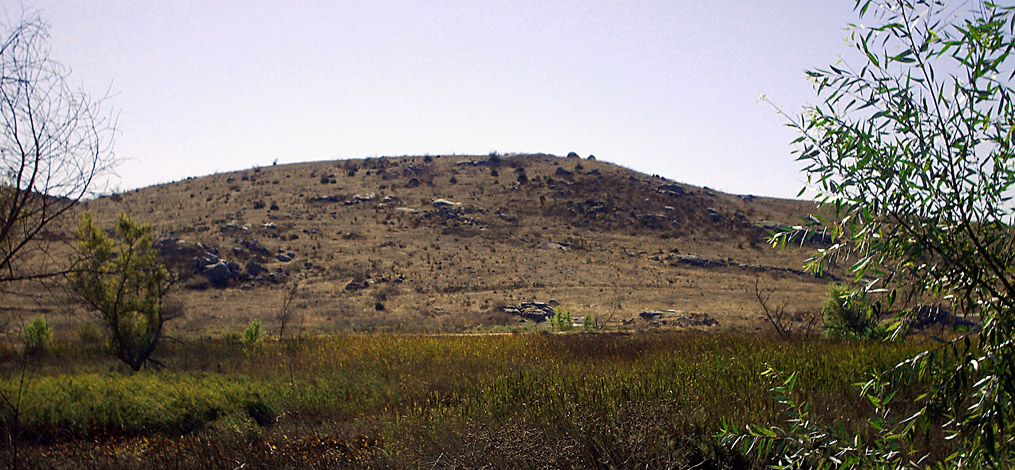
What’s in a name? It can get complicated.

Take George A. Cowles, whose name today is marked by the highest mountain in the city of San Diego. That honor, however, would come decades after his death.

Born in 1836 in Connecticut, George Cowles was by the age of 33 a wealthy cotton broker and mill owner. But poor health led him to seek milder climates. He and his wife Jennie first visited San Diego County in the early 1870s, and they apparently liked it. In 1877 Cowles purchased 4,000 acres in the El Cajon Valley He was soon a successful grower of muscat grapes, olives, and other crops, as well as a cattle rancher. He got into banking and railroad development as well.

Not surprisingly, Cowlestown was the name of the post office and then a town that grew up around George’s ranch. But not for all that long. George Cowles died in 1887 at the age of 51. Three years later his widow Jennie remarried, taking as her new husband a realtor and surveyor named Milton Santee.

The rest as they say, is history. At least George’s name lives on in the mountain.

Sources for this post included the 1888 book, The City and County of San Diego Illustrated, and Containing Biographical Sketches of Prominent Men and Pioneers, by T. S. Van Dyke, San Diego County Place Names A To Z, by Leland Fetzer, and the website of the City of Santee.

Get Updates Automatically-Become A Follower of the San Diego History Seeker

You can get updates of San Diego History Seeker automatically in your email by clicking on the “Follow” button in the lower right corner of the blog page. You’ll then get an email asking you to confirm. Once you confirm you’ll be an active follower.

A post office named…Weed?

From 1880 to 1886 the list of official United States post offices in San Diego County included one called Weed. Readers needing proof can see it below in an excerpt from the register of U. S. Post Offices in the records of the U. S. National Archives:

Weed post office entry

Credit Appointments of U. S. Postmasters, National Archives and Records Administration

You’ll see that the name had nothing to do with vegetation, but rather the name of the postmaster, whose home also happened to be the location of the post office. In this case the postmaster was William Seaman Weed, who owned a 330-acre ranch in an area than known as Cordero in San Dieguito Township. It’s part of an area we call Sorrento Valley today.

Weed’s farm was located along the California Southern railroad tracks, “conveniently located” for his position of postmaster, according to an article in The San Diego Sun of August 18, 1883. The article also noted that “Mrs. Weed is celebrated as a good newspaper correspondent, many interesting letters from her facile pen having appeared occasionally in the columns of The Sun.”

As the register shows, Mrs. Georgia Weed in fact succeeded her husband in running the post office in April of 1883.

The register also indicates that the Weed post office went out of business in November of 1886, when service for the general area was transferred to a location a few miles north and east. It was a location in a newly developing resort town with a catchier name: Del Mar.

Sources for this post included the U. S. National Archives, historic San Diego newspapers, and the book, San Diego County Place Names A To Z by Leland Fetzer.

Get Updates Automatically-Become A Follower of the San Diego History Seeker

You can get updates of San Diego History Seeker automatically in your email by clicking on the “Follow” button in the lower right corner of the blog page. You’ll then get an email asking you to confirm. Once you confirm you’ll be an active follower.


Does this sound a little like a certain board game?

The following anecdote comes from the 1908 book History of San Diego 1542-1908: Volume II, by William E. Smythe.

It’s part of an interview conducted in late 1905 with Alonzo Horton, the man known as the father of the city of San Diego. Horton was then in his late 90s. He was recalling when he and others arrived in San Diego in the late 1860s and began buying up and developing property. This particular account seems to describe a live version of a Monopoly game:

“There was a man named John Allyn, who built the Allyn Block on Fifth Street. He came down here to see San Diego and I hired him to paper this old building that I had sold to Dunnells [that’s S. S. Dunnells, who built the first hotel in what was then called Horton’s Addition]. He was four days doing the work and I gave him for it the lot on the southeast corner of Fifth and D Streets, 50×100. He took it, but said he didn’t know whether he would ever get enough for it to make it worth while to record the deed. It was only a year or two later that he sold it for $2,000 to the people who now own it, and it is now [circa 1905] worth over $100,000.”

Get Updates Automatically-Become A Follower of the San Diego History Seeker

You can get updates of San Diego History Seeker automatically in your email by clicking on the “Follow” button in the lower right corner of the blog page. You’ll then get an email asking you to confirm. Once you confirm you’ll be an active follower.

“…a thorough woman of business…”

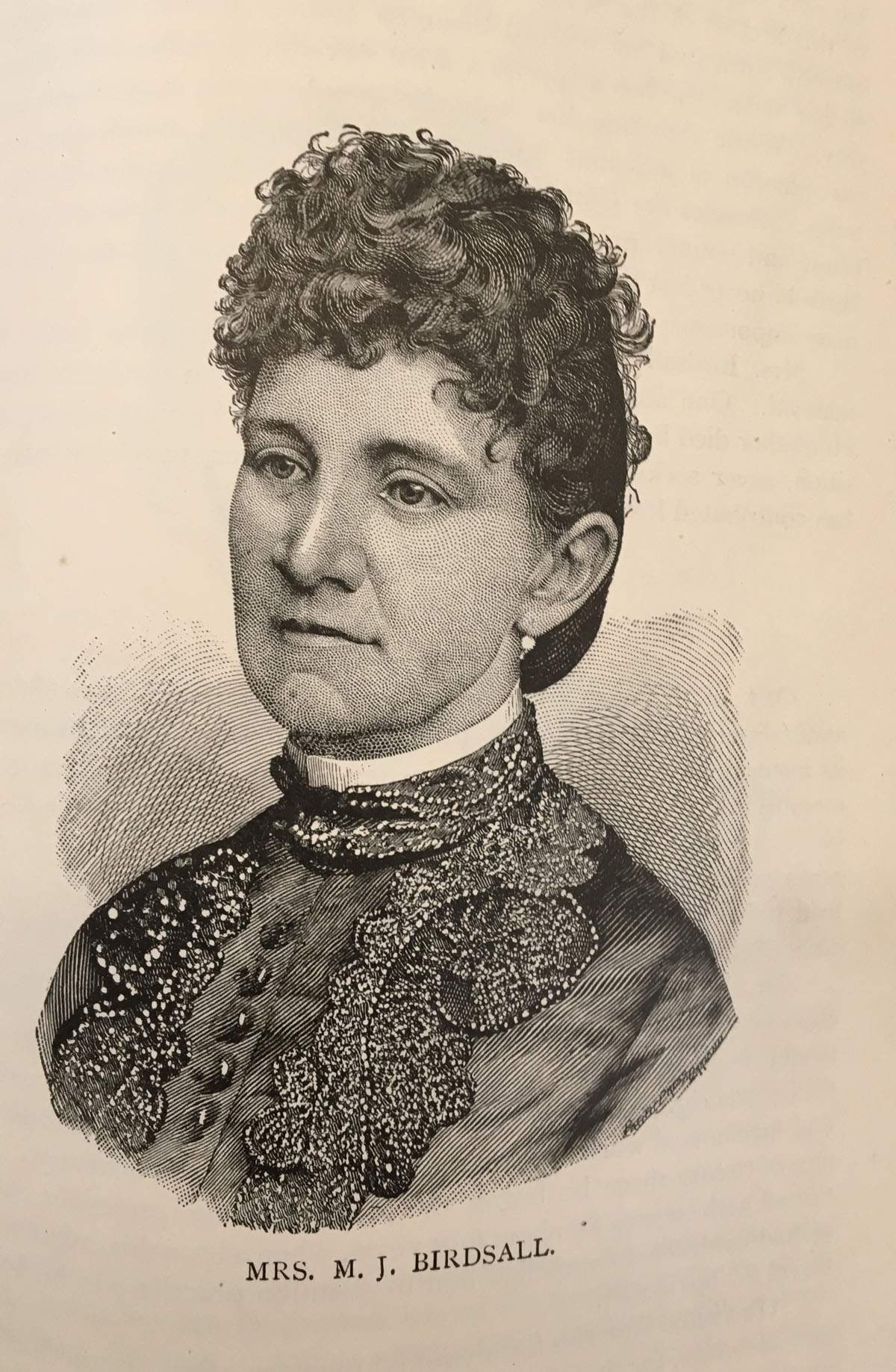
That was one of the phrases used in a biographical sketch of Mary J. Birdsall which appeared in a book published in 1888 entitled: The City and County of San Diego Illustrated And Containing Biographical Sketches of Prominent Men and Pioneers.

Here is a drawing of Mrs. Birdsall from the book:

Birdsall

The book’s title is a mouthful in itself, which was the style of a lot of volumes in that era, especially those written to salute a certain region and those considered its most notable citizens.

The book nevertheless offers an interesting snapshot of San Diego in 1888, and of this one particular person’s life. That’s especially true from the perspective of the reader in 2016. Note the reference in the title to “Biographical Sketches of Prominent Men and Pioneers.” There are actually 47 bios presented in the book, but Birdsall is the only woman listed.

Born in Missouri but raised in Tennessee, Birdsall is described as having been “educated at the Young Ladies Model School in Summerville, Tennessee” from which “she graduated at the age of fifteen, and within a year was married.” She and her husband came to California during the 1860s, first to northern California and then to San Diego in 1870, a time when “what is now the city of San Diego contained but a few board houses.”

While she started a restaurant called the Home “in company with her husband,” within a few sentences Mary is clearly starting a larger business independently. “In 1881,” states the book, “she began the erection of the fine house at present occupied and managed by her, the Commercial Hotel on the corner of Seventh and I Streets.”

A check of historic San Diego newspapers bore out the change in her life, with coverage in 1882 of her suing her husband for divorce on the grounds of “habitual intemperance.” That coverage soon gave way to descriptions of her as the proprietor of a well-run hotel and an active businessperson and civic leader.

“Being cast upon her own resources,” the bio concluded, “Mrs. Birdsall cultivated her natural business ability, and by strict attention to her duties she has acquired a most enviable position in the community. While directing her hotel in an admirable manner she has, by the exercise of judicious investments, acquired a handsome competency. Besides the Commercial Hotel she owns considerable city real estate and county property.”

Here’s to one strong woman whose story made it into print.

Get Updates Automatically-Become A Follower of the San Diego History Seeker

You can get updates of San Diego History Seeker automatically in your email by clicking on the “Follow” button in the lower right corner of the blog page. You’ll then get an email asking you to confirm. Once you confirm you’ll be an active follower.

Olive Days in Fallbrook

“The finest olives I have ever tasted I ate at the San Diego Mission; and the olives of this State, when carefully pickled, are far superior to those we get from France or Spain.”

Journalist Charles Nordhoff, wrote those words in his book, California: A Book for Travellers and Settlers, published in 1873.

Nordhoff was on to something.

“During the period 1913-1915 olives were the largest cash crop in the Fallbrook area,” wrote the late Don Rivers of the Fallbrook Historical Society in a 1998 essay which can be found in the society’s archives.

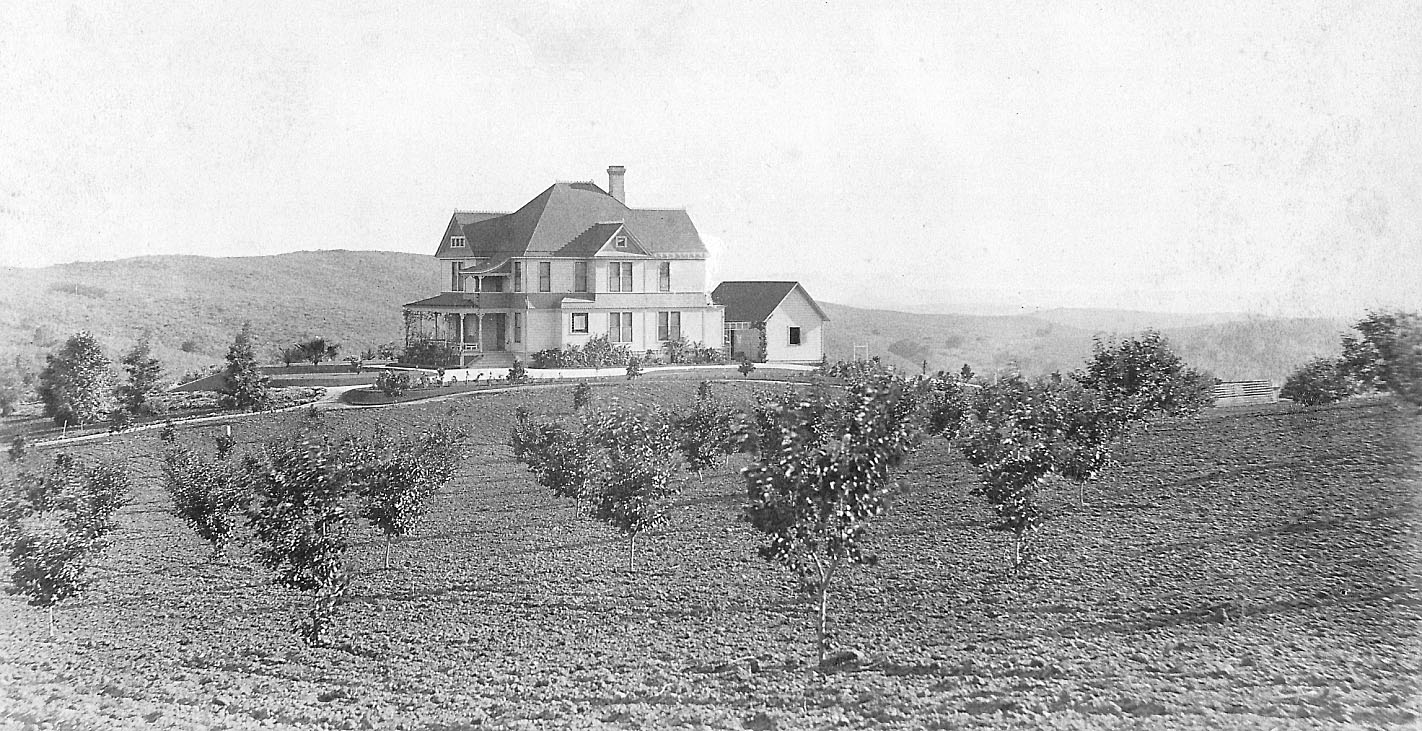
One of the early centers of olive production in the Fallbrook area was the Red Mountain Ranch, which was located just northeast of Fallbrook at the top end of Live Oak Canyon. Here’s a photo of the ranch house and surrounding groves in 1892:

Red Mountain 1892 Barker-Kelsey collection

Photo credit Fallbrook Historical Society.

The ranch harvested 150 tons of olives in 1910, according to an article in the March 1911 issue of the newspaper Fallbrook Enterprise.

By the middle of the twentieth century the olive would be eclipsed in local importance by citrus and avocados. Today scattered groves of olives remain, along with street names like Olive Hill Road and Olive Avenue, as reminders of Fallbrook’s olive days.

In addition to the Nordhoff book, sources for this post included the archives of the Fallbrook Historical Society.

Get Updates Automatically-Become A Follower of the San Diego History Seeker

You can get updates of San Diego History Seeker automatically in your email by clicking on the “Follow” button in the lower right corner of the blog page. You’ll then get an email asking you to confirm. Once you confirm you’ll be an active follower.