“King of the Beekeepers”

Some readers may recall a past post about the steamer “Orizaba” which brought many new residents to San Diego from points north in the late 19th century. One of the more interesting passengers on that steamer in November 1869 was John Harbison, who came with his business partner R. G. Clark. It was notable because among the possessions these two gentlemen brought with them were 110 colonies of honeybees.

Harbison already had a national reputation as an apiarist. He’d patented what came to be called the “Harbison Hive Box” in 1859 and authored a groundbreaking textbook on the subject in 1861. He had flourishing hives and honey businesses in his home state of Pennsylvania and in northern California when he turned his attention to San Diego.

He met with the same success here. Within a couple of years he was shipping honey from his San Diego County operation across the country. He was selling colonies and hive boxes to other apiarists as well, encouraging a burgeoning industry in the county and the state.

“In 1874 beekeeping became a major industry in the county,” according to a 1969 article in The Journal of San Diego History. “ Two sawmills were kept busy a good part of the year turning out beehives, frames, section boxes and shipping cases. Honey production for that year was nearly one-half million pounds.”

Harbison had surely earned his nickname, “King of the Beekeepers.”

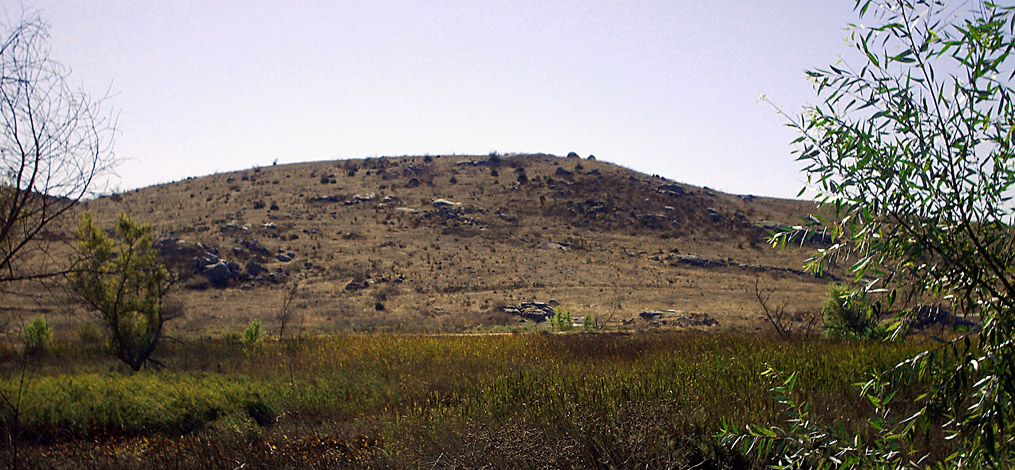
Honey production isn’t as dominant in these parts today as it was then. Still, San Diego County today ranks third among all other counties in the nation in honey production, according to the county farm bureau’s website. So John Harbison’s name and contributions live on in today’s local apiarists and in the Harbison hive box design many of them use. His name lives on as well in the place near the Sweetwater River that was home to his local hives, Harbison Canyon.

Sources for this post included historic San Diego newspapers, the article, “John S. Harbison: Pioneer San Diego Beekeeper,” by Lee H. Watkins, which appeared in The Journal of San Diego History in its Fall 1969 issue, and the 1888 book, The City and County of San Diego Illustrated and Containing Biographical Sketches of Prominent Men and Pioneers.

Get Updates Automatically-Become A Follower of the San Diego History Seeker

You can get updates of San Diego History Seeker automatically in your email by clicking on the “Follow” button in the lower right corner of the blog page. You’ll then get an email asking you to confirm. Once you confirm you’ll be an active follower.
Election Aftermath-1892

The presidential election of 1892 fell on November 8, just like this year’s. On November 10, 1892, The San Diego Union reported that James Weaver, presidential candidate of the People’s Party (also known as the Populist Party) had carried at least three county communities: Fallbrook, Bear Valley (today’s Valley Center), and San Marcos. The Populist ticket came in second in Poway, losing to Republican incumbent President Benjamin Harrison, but beating Democrat Grover Cleveland.

Cleveland was the ultimate winner nationwide, garnering 5.5 million votes nationally to Harrison’s 5.1 million. Weaver drew a bit over a million votes nationwide. But while the Populists were the losers in that election, it’s worth noting some of the planks in their 1892 platform, which included, among other things, a graduated income tax, the direct election of United States Senators, and election reforms to insure “a free and fair ballot in all elections…”

This would not be the last time that a so-called “third party” would pioneer reforms that would ultimately become law.

The Populists then were also known for fighting for the voting rights and civil rights of black farmers in the former Confederacy, literally riding to their defense in some cases against attempts by the KKK to suppress the black vote.

Within the first decades of the twentieth century, however, the People’s Party would be torn by racism and wind up supporting efforts to suppress the people it had fought to defend and embrace. That would ultimately lead to the party’s collapse and disappearance. Its followers would be absorbed into the Republican or Democratic parties, whom the People’s Party had originally challenged for their dominance.

That wouldn’t be the last time that would happen either.

Sources for this post included historic San Diego newspapers and the book, The Right To Vote: The Contested History of Democracy in the United States, by Alexander Keyssar.

Get Updates Automatically-Become A Follower of the San Diego History Seeker

You can get updates of San Diego History Seeker automatically in your email by clicking on the “Follow” button in the lower right corner of the blog page. You’ll then get an email asking you to confirm. Once you confirm you’ll be an active follower.

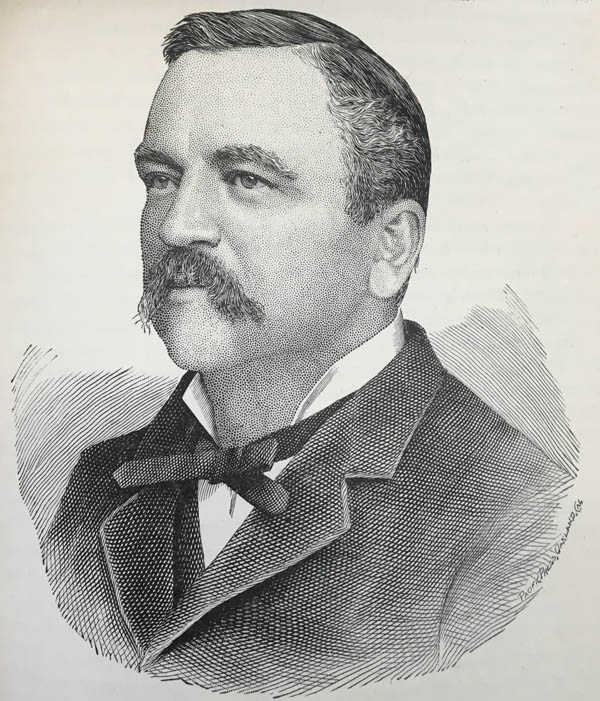
Busy Mr. Wetmore

charles-wetmoreCharles Wetmore portrait from City and County of San Diego Illustrated, 1888

Most San Diegans today probably haven’t heard of Charles Wetmore. But he was a busy guy for most of his life. Born in Maine in 1847, he came to California at the age of nine with his mother, joining his father who was a pioneer developer in northern California who’d built wharves and invested in mines and railroads.

At the age of 12, Charles became co-editor of Young California, considered “the first juvenile paper on the coast,” according to a biographical sketch in the 1888 book, The City and County of San Diego Illustrated. As a young journalist and activist, he was involved in causes ranging from organizing carpenters to helping establish the University of California.

He came to San Diego fresh out of college in 1868. The biographical sketch said he “had a strong taste for journalism and intended to publish a newspaper, but changed his mind and established a real estate agency, the first one in the new city.” Not long after opening that office, Wetmore, in partnership with another individual, “negotiated his first sale—the San Bernardo Ranch.”

Actually, he bought a portion of the then-17,000 acre rancho from James McCoy. But that was the beginning of substantial property and other business and political dealings for Charles Wetmore.

The city of San Diego in 1868 was concentrated primarily in Old Town. There was not yet a wharf or a railroad. But Wetmore and others would play a role in changing that.

Get Updates Automatically-Become A Follower of the San Diego History Seeker

You can get updates of San Diego History Seeker automatically in your email by clicking on the “Follow” button in the lower right corner of the blog page. You’ll then get an email asking you to confirm. Once you confirm you’ll be an active follower.

These Kids Today…Oh, Wait A Minute

The entire student body marched out of school and went on strike to protest the policies of the local school board. Sound like Berkeley in the 1960s? No, it was the city of San Diego in June 1918.

The walkout of 1,500 students, virtually the entire student body of San Diego High School, was immediately caused by the abrupt firing of 19 teachers by the five-member Board of Education. But pressure had been building since the previous school year, when the board, with three newly elected members taking the lead, dismissed school superintendant Duncan McKinnon, who’d proved popular with teachers and students as well as most city officials.

The board followed that up with a questionnaire sent to all city teachers asking their opinions of their jobs. This questionnaire was prepared by the board’s “teachers committee,” whose membership included no teachers. City teachers at that time served under year-to-year contracts. At a mass meeting in response to the questionnaire, 91 of the 94 teachers on staff chose to respond with a collective statement rather than individually. Seventy-seven of them eventually signed a reply which was sent to the board.

On June 6, 1918, the board mailed dismissal notices to 19 teachers. Among those dismissed were Arthur Gould, principal of San Diego High School, and Pauline Gartzmann, who had been secretary of the teachers meeting which had approved the joint reply to the school board.

The response by the students was to organize a walkout. Led by a disciplined executive committee, they marched downtown and rallied in Balboa Stadium. They also drew up a petition to the board demanding an explanation for the dismissals. And they called a strike to last until their questions were answered.

Their activities culminated a few days later in another rally at the stadium where the students were joined by some 4,000 members of the general public sympathizing with their demands. Public supporters included organizations like the Rotary Club and Chamber of Commerce.

The strike lasted through the end of the school year on June 21. City newspapers reported the communications of both sides, included a statement from the school board refusing to recognize “the insurrection and the alleged resolution of the so-called student body of the High School.”

The matter may have been clinched on June 22 when The San Diego Union published a letter from the board claiming the “several among those” dismissed “were under surveillance by the authorities for Pro-Germanism and those teachers were dropped for that reason.”

This was in the midst of the First World War. However, letters of inquiry sent by supporters of the students to government law enforcement and intelligence officials revealed that none of the teachers had been under investigation.

Students returned for the new school year on August 31. Some of the teachers had been reinstated, but most had accepted employment elsewhere or had entered defense work, according to Robert Heilbron in his essay, “Student Protest At Its Best: San Diego, 1918” published in the January 1974 Journal of San Diego History.

The school board members never retracted their false claims about the teachers, but a public campaign eventually resulted in the recall of the three board members who had spurred the firings and the strike.

In addition to the Heilbron essay, sources for this post included the 2013 book San Diego Yesterday by Richard Crawford.

Get Updates Automatically-Become A Follower of the San Diego History Seeker

You can get updates of San Diego History Seeker automatically in your email by clicking on the “Follow” button in the lower right corner of the blog page. You’ll then get an email asking you to confirm. Once you confirm you’ll be an active follower.

20 Mile House

“Mr. Gillespie and family occupy the 20 mile house, serving meals for the stage line. They are highly respected and quite an addition to the valley.”

So ran a short piece in the Poway Progress newspaper on May 16, 1896

It was called “20 Mile House” because it was at the halfway point on the stagecoach route between San Diego and Escondido. It stood along the old Poway Grade, the twisting and turning mountain road which was then the sole connection between the city of San Diego and the Poway Valley.

In the early 1900s the grade was rerouted further east. The area where 20 Mile House stood today fronts on Old Pomerado Road. But from at least the days of the Gillespies up through around 1910 or so it was the place where stagecoaches stopped to change horses and passengers and crew got a meal.

The building, which no longer exists, often gets confused with another structure built nearby in the late 1920s, the Big Stone Lodge.

Sources for this post included historic San Diego County newspapers, the archives of the Escondido History Center and the Poway Historical and Memorial Society, and the book Historic Stage Routes of San Diego County by Ellen L. Sweet and Lynne Newell.

Get Updates Automatically-Become A Follower of the San Diego History Seeker

You can get updates of San Diego History Seeker automatically in your email by clicking on the “Follow” button in the lower right corner of the blog page. You’ll then get an email asking you to confirm. Once you confirm you’ll be an active follower.